
Boat Carpet to Foam Conversion: What to Know
A boat carpet to foam conversion replaces traditional marine carpet with closed-cell foam flooring, giving you a surface that dries faster, resists mold, and is far easier to clean. Most boat owners make the switch after years of fighting musty carpet that holds water and hides rot underneath. If you are already planning a flooring update, this conversion is one of the most practical upgrades you can make during a boat carpet replacement. Learn more about Boat Carpet Replacement.
Why Boat Owners Are Ditching Carpet for Foam
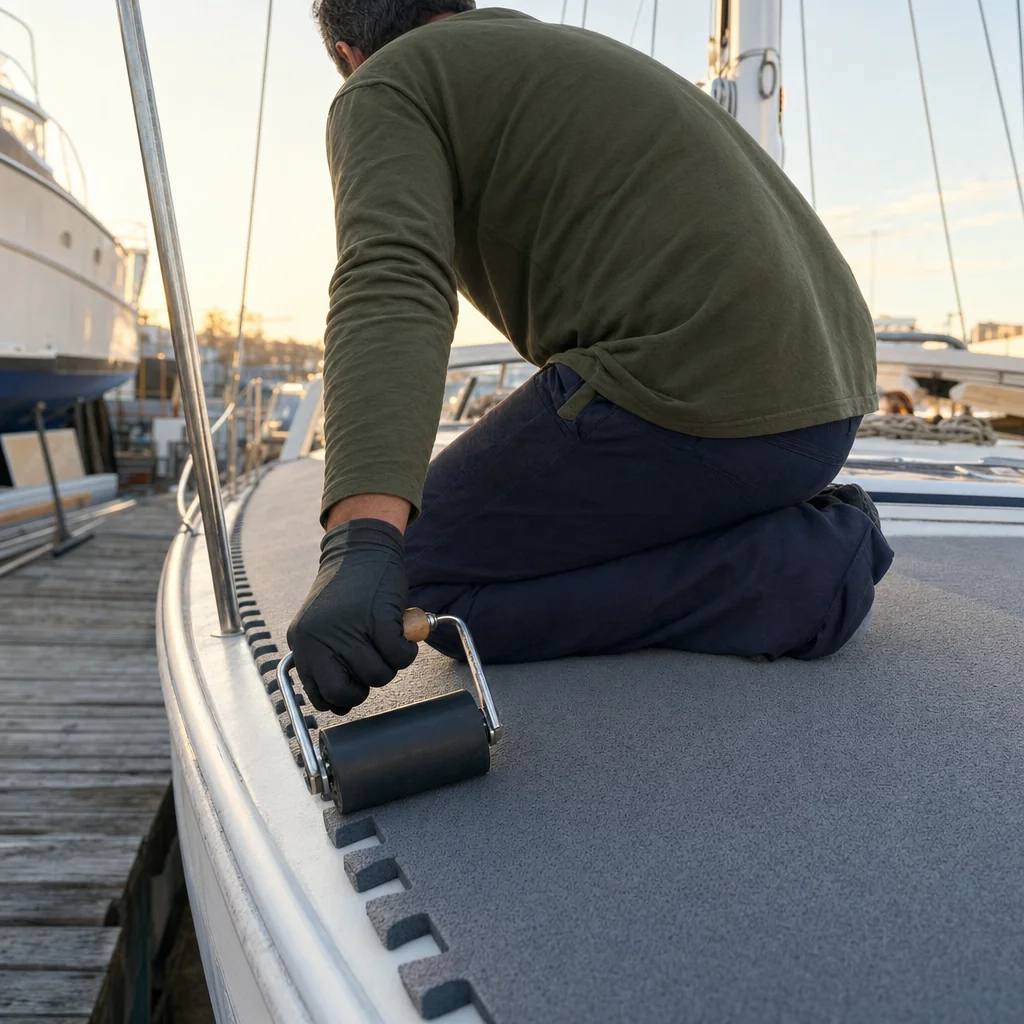
Marine carpet was the standard for decades because it was affordable and easy to install, but it has a fundamental flaw: it absorbs water and holds it against the deck. Over time that trapped moisture breaks down the adhesive, softens the wood substrate underneath, and creates the conditions for mold and rot. Closed-cell foam flooring solves this at the source because water cannot penetrate the material itself. It drains quickly, dries on the surface, and does not give mold anywhere to take hold, which is why fishing boats and pontoons in particular have shifted toward foam in large numbers.
How the Conversion Process Works
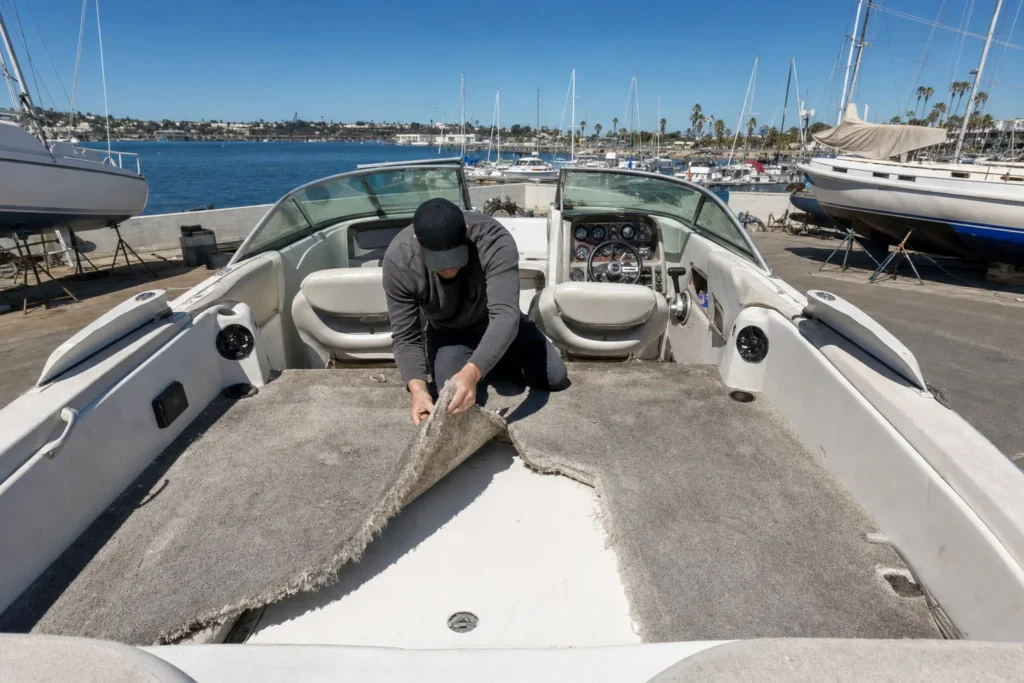
The first step is removing all existing carpet, which means pulling up the material, scraping off old adhesive, and inspecting the deck for soft spots or rot. Any damaged substrate has to be repaired before new flooring goes down, because foam will not fix a structural problem underneath it. This inspection phase is one of the most valuable parts of the job and often reveals issues that were hidden for years under the old carpet.
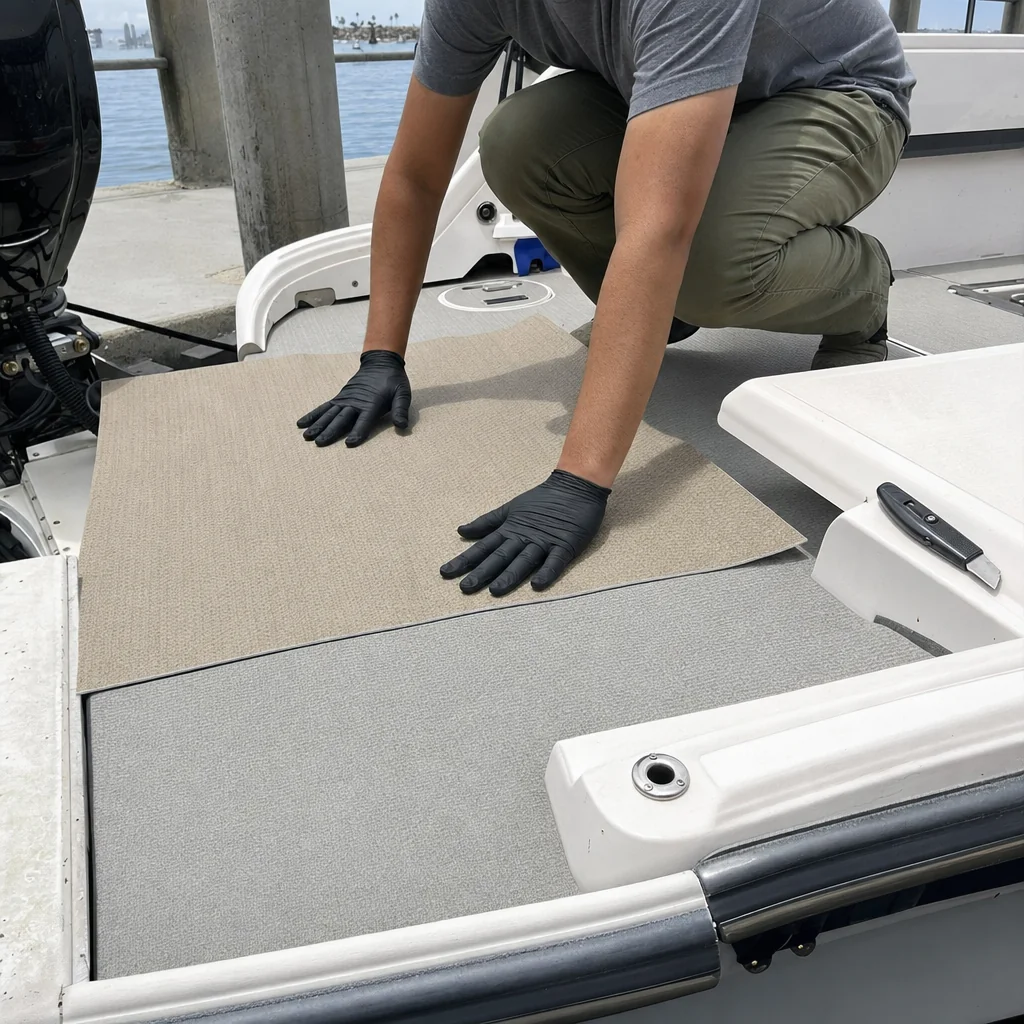
Once the deck is clean and solid, the foam panels are cut to fit the contours of the boat. Quality marine foam flooring uses a UV-stable top layer bonded to a closed-cell foam core, and it is typically glued down with a marine-grade contact adhesive. Seams are kept to a minimum and placed away from high-traffic areas when possible. The finished surface looks clean, feels comfortable underfoot, and can be hosed down completely without any concern about water damage.
- Remove carpet and strip all old adhesive residue
- Inspect and repair any soft or rotted deck sections
- Cut foam panels to fit hatches, rails, and curved edges
- Apply marine-grade adhesive and press panels into place
- Seal edges and seams to prevent lifting over time
Factors That Affect Your Conversion Cost and Timeline
Several variables determine how straightforward or involved a boat carpet to foam conversion will be for your specific vessel.
Boat Size:
Larger boats require more material and more labor hours for cutting and fitting. A small fishing boat takes far less time than a full pontoon or deck boat.
Deck Condition:
If the substrate under the carpet is soft or rotted, repairs must happen before flooring is installed. This adds cost but protects your investment.
Layout Complexity:
Boats with many hatches, pedestal bases, live wells, and curved edges take longer to template and cut accurately than open, flat decks.
Foam Thickness and Grade:
Thicker foam with a premium UV-stable cap layer costs more but lasts significantly longer and holds its color better in direct sun.
Adhesive and Edge Treatment:
Proper marine adhesive and sealed edges prevent lifting and peeling. Cutting corners here leads to early failure and a redo job.
Color and Pattern Choice:
Standard colors are typically in stock and ready to install. Custom colors or patterns may require ordering lead time before work can begin.
Foam Flooring Performance Over the Long Term
One of the biggest advantages of foam over carpet is how little maintenance it requires after installation. Cleaning is as simple as rinsing with a hose or wiping down with a mild soap, and there is no need to worry about mildew odor building up between uses. The closed-cell structure also provides a slight cushion underfoot, which reduces fatigue on long days on the water. With proper installation and basic care, quality marine foam flooring typically outlasts carpet by several years, making the upfront cost difference easy to justify over the life of the boat.
Related Guides
Next: Fishing Boat Flooring
Frequently Asked Questions
Is foam flooring slippery when wet?
Quality marine foam flooring is designed with a textured surface that provides grip even when wet. It is generally safer underfoot than smooth gelcoat and comparable to or better than wet carpet. Always confirm the product you choose has a non-slip rating appropriate for marine use.
Can I install foam flooring over existing carpet without removing it?
It is not recommended. Installing over old carpet traps the same moisture you are trying to eliminate and prevents you from inspecting the deck underneath. Removing the carpet first is the only way to ensure a clean, solid surface that will hold the adhesive properly.
How long does a boat carpet to foam conversion take?
A straightforward conversion on a small to mid-size boat typically takes one to two days. Larger boats or those with deck repairs needed can take three to four days. The adhesive cure time is part of the timeline, so the boat should not be put back in the water immediately after installation.
Will foam flooring fade or crack in the sun?
Lower-quality foam can fade and become brittle with prolonged UV exposure. Marine-grade foam with a UV-stabilized cap layer is specifically engineered to resist this. Choosing the right product matters more than the material category itself.
Does foam flooring add resale value to a boat?
Fresh, clean flooring consistently improves the appearance and perceived condition of a used boat. Foam flooring in good condition signals to buyers that the owner maintained the vessel, and it removes a common concern about hidden deck rot under old carpet.
How does this relate to a full boat carpet replacement?
A foam conversion is one option within a broader boat carpet replacement project. If you are already pulling up old carpet, it is the ideal time to evaluate whether foam is a better long-term fit for how you use the boat. Learn more about all your flooring options on our boat carpet replacement page.