Non Slip Boat Flooring That Keeps You Safe
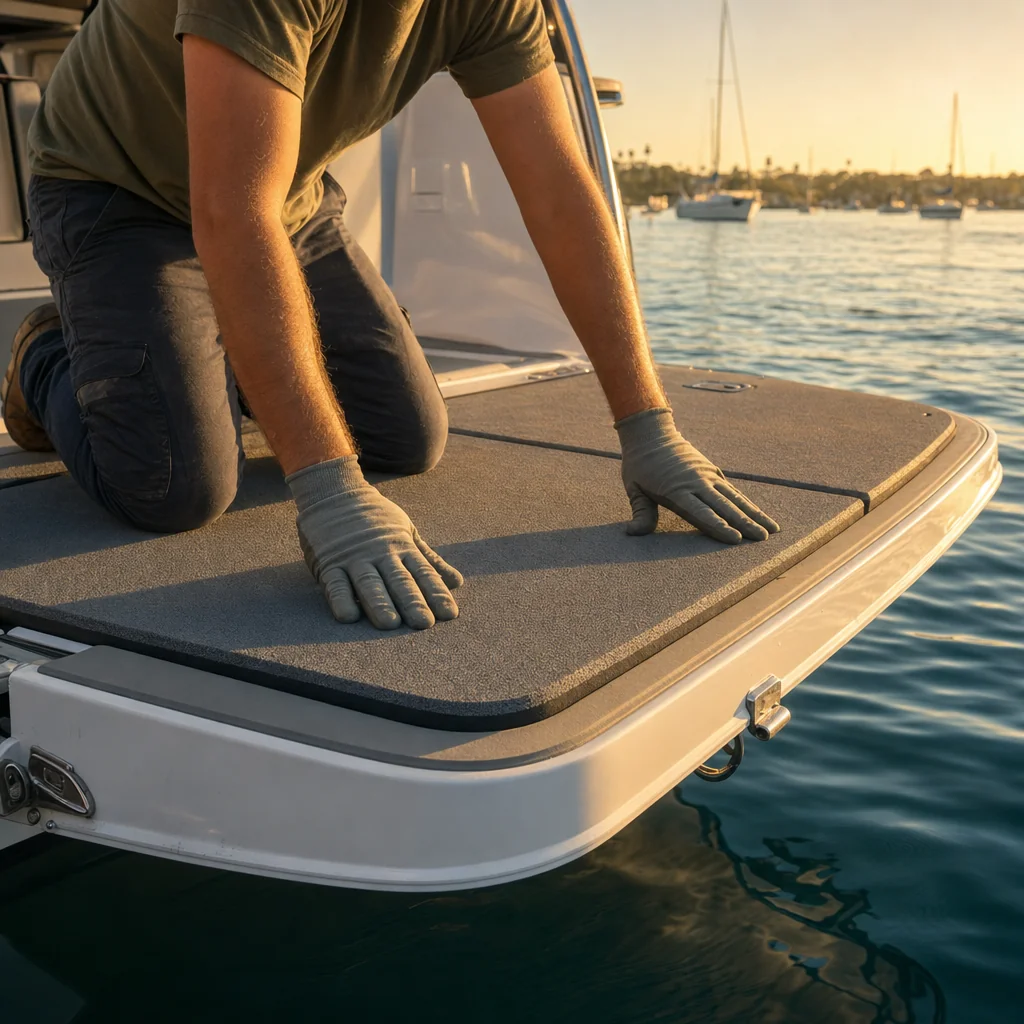
Non slip boat flooring is any deck surface engineered to maintain grip when wet, reducing the risk of falls on a moving vessel. EVA foam decking is one of the most effective solutions available today because it combines a textured, closed-cell surface with cushioning underfoot and a precise fit cut to your deck. If you are weighing your options, understanding what makes a surface truly non-slip will help you choose material that performs season after season. Learn more about Eva Foam Boat Decking.
Why Grip Matters More Than It Looks
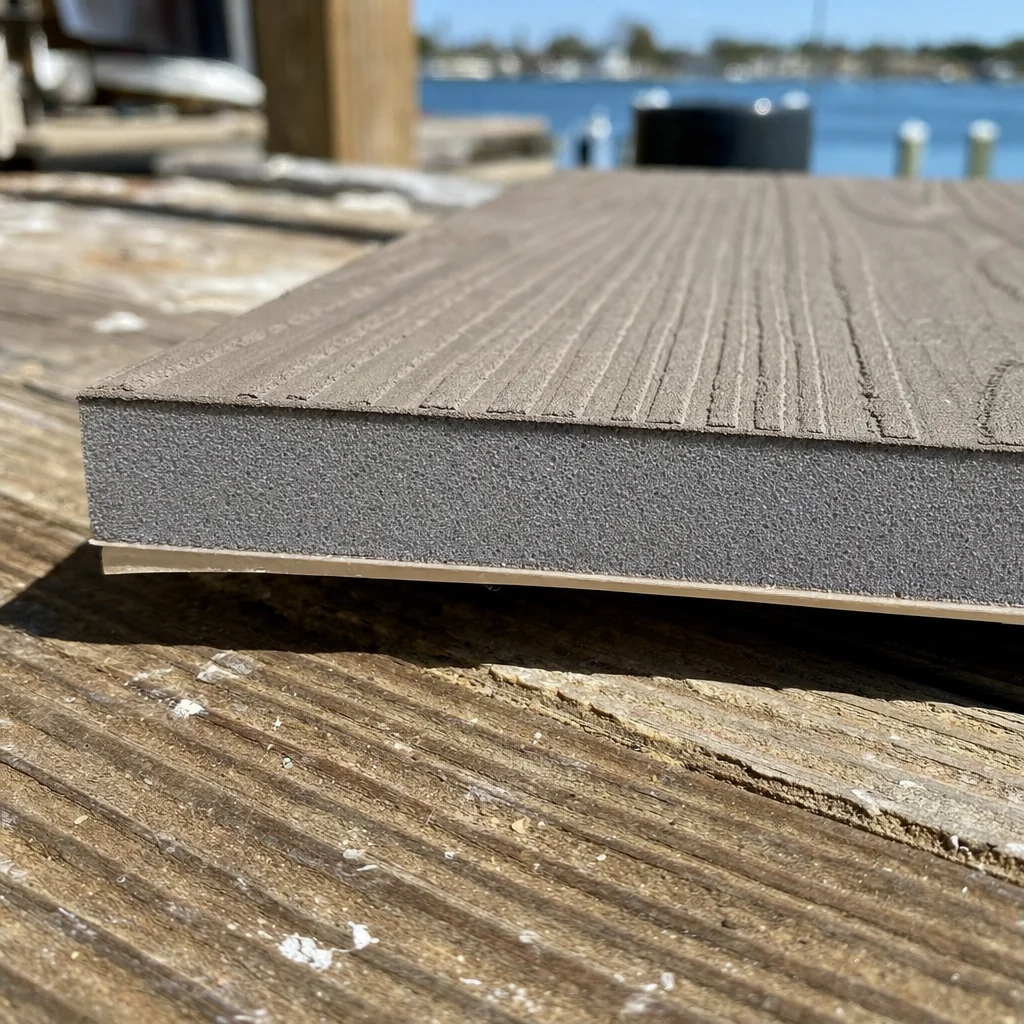
A wet fiberglass deck can become dangerously slick within seconds of a wave washing over the bow, and bare aluminum is even worse. Non slip boat flooring solves this by introducing texture, drainage channels, or a material that naturally grips wet skin and rubber soles. EVA foam achieves this through a diamond, teak-pattern, or brushed surface that channels water away while the foam itself stays grippy rather than polished. Beyond safety, a proper non-slip surface reduces fatigue because your feet are not constantly micro-correcting your balance.
How EVA Foam Compares to Other Non-Slip Options
Boat owners have historically relied on painted non-slip coatings, rubber mats, or teak planking to add grip. Painted coatings wear quickly, require reapplication every season, and can peel in UV-heavy environments. Rubber mats trap moisture underneath, which accelerates deck corrosion and creates a breeding ground for mold. Real teak looks beautiful but demands regular oiling, is heavy, and has become expensive as quality timber grows scarce.
EVA foam decking threads the needle between all of these. It is lightweight, UV-stabilized, and adheres directly to the existing deck with a pressure-sensitive adhesive backing, leaving no gap for water to pool underneath. The surface texture is molded in rather than applied on top, so it does not sand off or fade the way a painted grit coat does. For most recreational and fishing boats, EVA foam delivers the best combination of grip, comfort, and long-term value.
- Painted coatings: low upfront cost, high maintenance, short lifespan
- Rubber mats: easy to install, trap moisture, shift underfoot
- Real teak: premium look, heavy, expensive, requires oiling
- EVA foam: lightweight, UV-stable, molded grip, low maintenance
Six Factors That Determine Non-Slip Performance
Not all non-slip surfaces perform equally — these are the key variables to evaluate before you buy.
Surface Texture Depth:
Deeper grooves and raised patterns channel water away faster and maintain grip even when the deck is fully submerged in a splash. Shallow textures flatten out over time and lose effectiveness.
Material Hardness:
Softer EVA foam (around 45-55 Shore C) conforms slightly to your foot, increasing contact area and grip. Harder materials feel more like fiberglass and offer less traction.
UV Stability:
Marine environments expose decking to intense sunlight year-round. UV-stabilized EVA resists fading and surface hardening, which preserves grip over multiple seasons.
Adhesive Quality:
A non-slip mat that shifts or peels at the edges becomes a trip hazard itself. Marine-grade pressure-sensitive adhesive keeps the panel flat and eliminates edge lifting.
Drainage Design:
Channels cut into the pattern direct water toward scuppers rather than letting it pool. Good drainage design is what separates a truly safe surface from one that just looks textured.
Thickness:
Standard EVA decking runs 6mm to 8mm thick, which is enough to cushion joints during long days on the water without raising the deck height enough to interfere with hatches or cleats.
Choosing the Right Non-Slip Boat Flooring for Your Boat
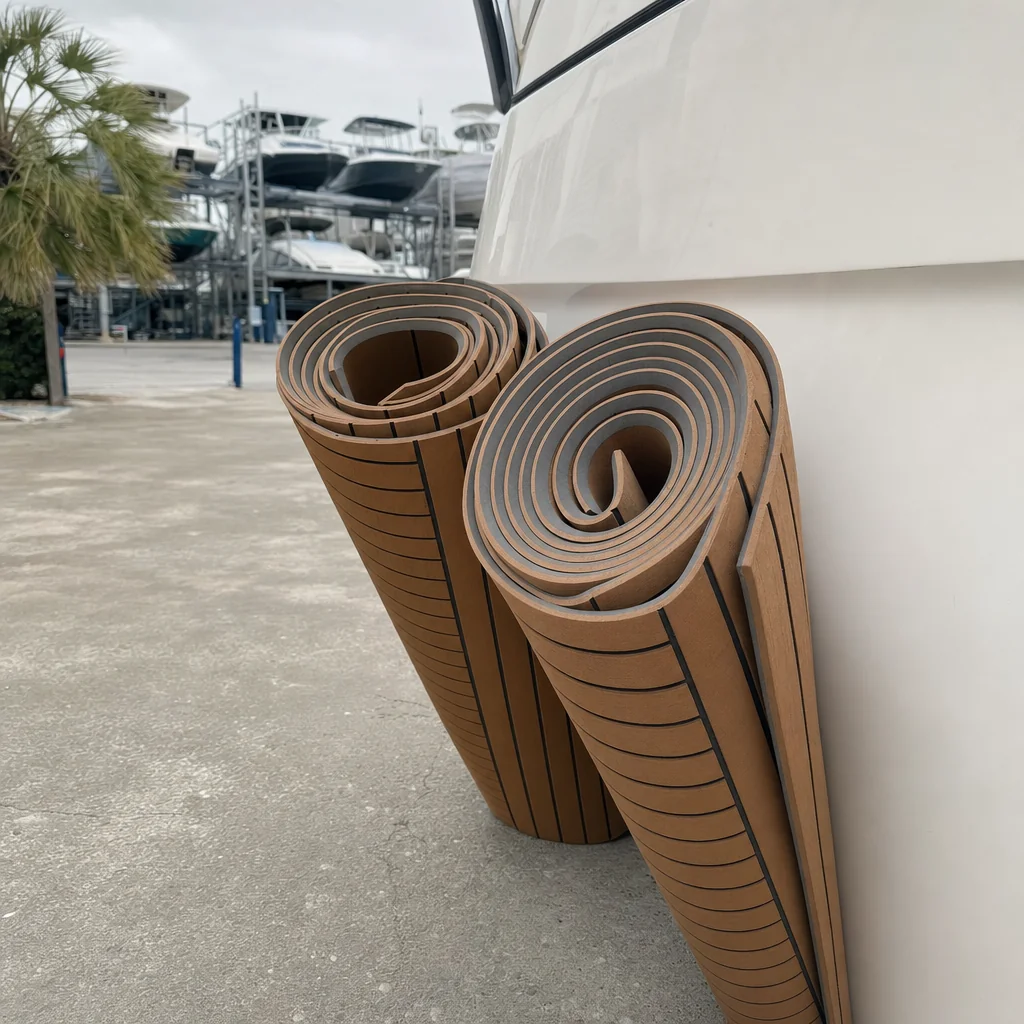
San Diego Boat Flooring measures every deck with a 3D scan and cuts each panel to fit using CNC equipment, so the material aligns precisely with your existing hardware cutouts and deck layout. Whether your boat has a straightforward open deck or an unusual shape, the panels are cut to match before the crew arrives to install them. EVA foam is available in a range of colors and grain patterns, so you can prioritize safety without sacrificing the look of your boat. Each installation uses UV-stabilized foam and a marine-grade adhesive to ensure the surface stays flat and grippy season after season.
Related Guides
Previous: Faux Teak Boat Decking | Next: Jet Ski Decking
Frequently Asked Questions
Is EVA foam actually non-slip when wet?
Yes. The closed-cell structure of EVA foam does not absorb water, and the molded surface texture maintains friction against wet feet and rubber soles. Independent testing consistently shows EVA foam outperforming painted non-slip coatings in wet-grip measurements. The texture depth is the main variable, so look for panels with a pronounced diamond or brushed pattern rather than a very fine grain.
How long does EVA foam non-slip decking last?
A quality UV-stabilized EVA foam deck typically lasts five to ten years under normal recreational use. Longevity depends on UV exposure, how often the boat is used, and whether the deck is cleaned regularly with mild soap rather than harsh solvents. Boats stored outdoors year-round in sunny climates may see the surface harden slightly sooner, but the grip remains functional well past the point where the color fades.
Does San Diego Boat Flooring handle the installation?
Yes. San Diego Boat Flooring measures your deck with a 3D scanner, CNC-cuts each panel to fit your specific layout, and installs everything on-site. That means the panels align precisely with hatches, cleats, and hardware cutouts without guesswork. The existing deck is cleaned and prepped before the pressure-sensitive adhesive backing is applied, so the foam bonds to the deck surface rather than to grease or oxidation.
Will EVA foam decking damage my fiberglass hull?
No. The pressure-sensitive adhesive used on marine EVA foam is designed to bond firmly during use but release cleanly when you apply heat from a heat gun during removal. It does not chemically etch fiberglass gelcoat the way some aggressive adhesives can. If you ever sell the boat or want to change the color, the panels come off without leaving permanent marks.
What is the difference between EVA foam decking and snap-in carpet?
Snap-in carpet uses a loop-pile fabric that absorbs water, dries slowly, and can harbor mold and mildew over time. EVA foam is closed-cell, meaning it repels water rather than soaking it up, and it dries almost instantly. Carpet also compresses and loses its texture with heavy use, while EVA foam retains its molded grip pattern throughout its lifespan.
How do I clean EVA foam non-slip boat flooring?
Rinse the surface with fresh water after each outing to remove salt and debris. For deeper cleaning, use a soft brush and a mild marine soap or a diluted mixture of water and white vinegar. Avoid bleach-based cleaners and petroleum solvents, which can degrade the foam compound over time. Regular rinsing is the single most effective maintenance habit for extending the life of any EVA foam deck.