
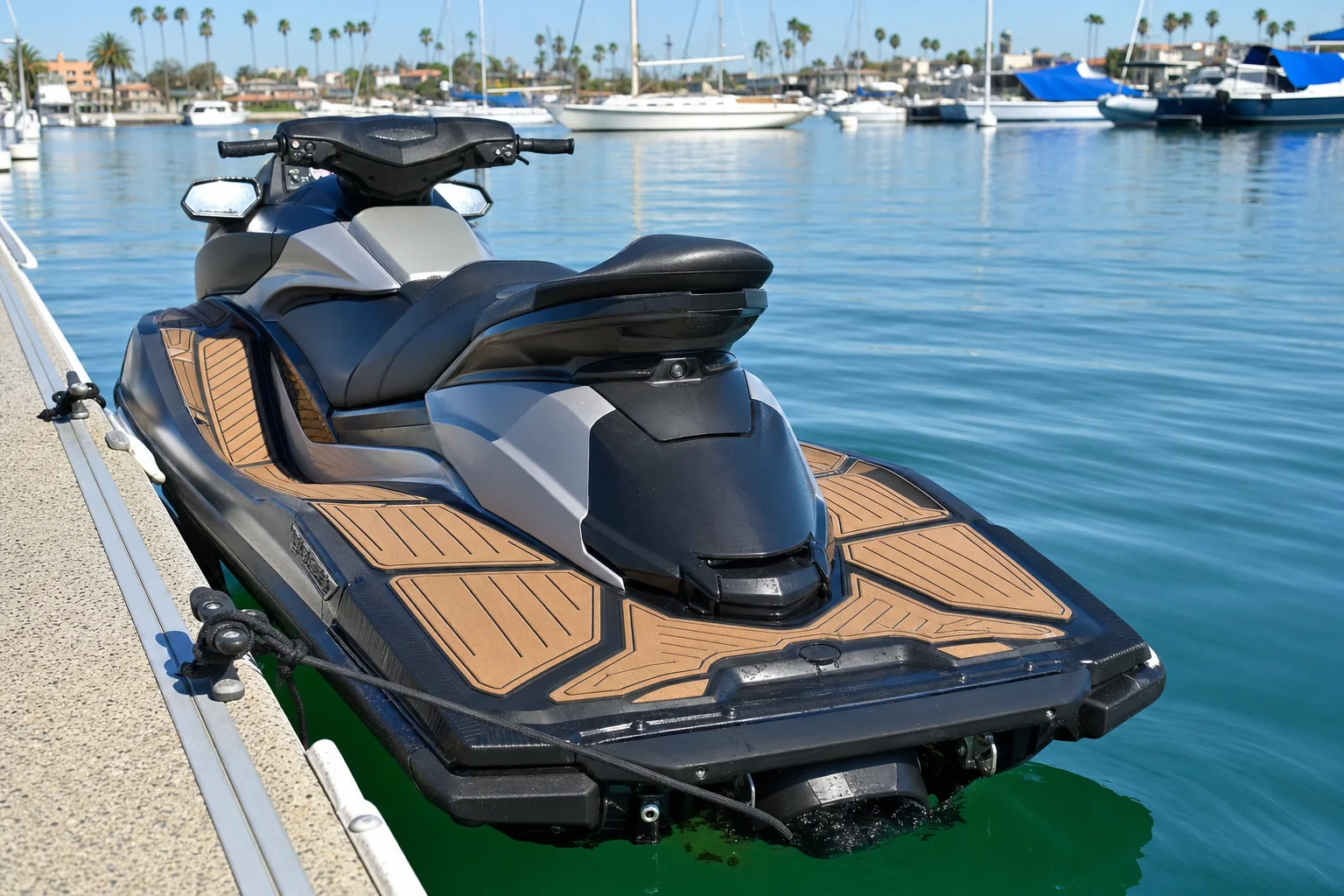
Jet Ski Decking: EVA Foam for PWC
Jet ski decking made from EVA foam is the most practical upgrade you can make to a personal watercraft. It adds grip, cushioning, and UV resistance without adding meaningful weight. If you already know EVA foam is the right material, visit our main eva foam boat decking page for full product details and options. Learn more about Eva Foam Boat Decking.
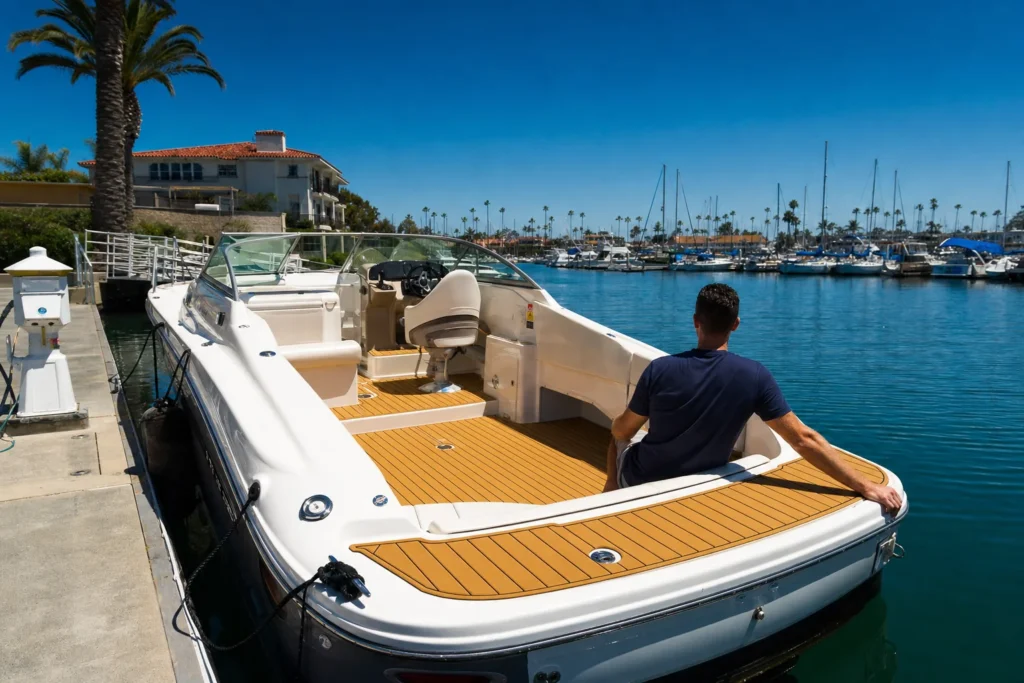
Why EVA Foam Works So Well on a Jet Ski
A jet ski puts its rider through more physical stress than almost any other watercraft. You are standing, kneeling, or shifting your weight constantly, and the stock plastic or fiberglass deck surface becomes slippery the moment it gets wet. EVA foam solves that immediately with a closed-cell texture that grips wet feet and bare knees alike. It also absorbs vibration from the hull, which reduces fatigue on longer rides and makes re-boarding from the water noticeably easier on your shins and knees.
How Jet Ski Decking Differs from Standard Boat Flooring
Boat flooring is typically cut for large, flat surfaces with relatively gentle curves. Jet ski decking has to conform to tight compound curves around the seat base, the nose, and the boarding platform at the stern. That means the foam needs to be thinner and more flexible than what you would use on a pontoon or center console. Most PWC applications use foam in the 6 mm range rather than the 8 mm or 10 mm sheets common on larger boats.
Adhesion is also more demanding on a jet ski because the craft spends more time fully submerged during capsizes and re-boarding. A marine-grade pressure-sensitive adhesive is non-negotiable. San Diego Boat Flooring measures each deck with a 3D scan and CNC-cuts the panels to fit your specific PWC, so every piece conforms precisely to those tight curves and bonds the way it needs to.
Key Areas to Cover with EVA Foam on a Jet Ski
Prioritizing where you apply decking helps you get the most comfort and safety benefit from your material.
Boarding Platform:
The stern step is where you climb back on after a fall. Foam here prevents slipping and protects your knees from hard fiberglass edges.
Front Deck:
Riders who stand or kneel on the nose need grip and cushioning. Foam on the front deck also protects the hull finish from footwear scuffs.
Seat Base Surround:
The area around the seat where your thighs grip the hull benefits from foam to reduce chafing and improve control during aggressive riding.
Footwell Inserts:
Molded footwells can be slick and uncomfortable. Thin EVA inserts sized to the well add traction without interfering with foot placement.
Handlebar Pad Area:
Some riders add a small foam pad just ahead of the handlebars where they brace during sharp turns, reducing bruising on longer sessions.

Choosing the Right Color and Texture for Your PWC
EVA foam for jet ski decking comes in solid colors, two-tone combinations, and a range of embossed textures from fine diamond to aggressive traction patterns. Darker colors absorb more heat in direct sun, which can be uncomfortable on bare skin during summer use, so lighter grays and tans are popular choices for PWC applications. Texture matters as much as color: a deeper emboss pattern sheds water faster and maintains grip even when the surface is covered in spray. Matching your foam color to the hull graphics is straightforward because most suppliers offer custom cutting and a wide palette, letting you treat the decking as a styling upgrade as well as a functional one.
Related Guides
Previous: Non Slip Boat Flooring | Next: Eva Foam Colors And Patterns
Frequently Asked Questions
Do I need a professional to install EVA foam jet ski decking?
Professional installation is the reliable way to get a clean, lasting result on a jet ski. The hull surface must be thoroughly cleaned and prepped, and the foam panels need to be pressed into place precisely, starting from the center of each section. San Diego Boat Flooring handles the full process, including fitting foam to the tight compound curves that make PWC decking more demanding than standard boat flooring.
How long does EVA foam decking last on a jet ski?
With proper installation and routine rinsing after saltwater use, EVA foam decking typically lasts four to seven years on a personal watercraft. UV exposure and abrasion from sandy re-boarding are the main factors that shorten lifespan, so rinsing and occasional UV protectant spray help extend it.
Will EVA foam decking damage my jet ski's hull?
No. The marine-grade pressure-sensitive adhesive used in professional EVA installations is designed to bond securely during use but release cleanly when heated with a heat gun during removal. It does not etch gelcoat or fiberglass, and it leaves no permanent residue when removed correctly.
Is there a difference between EVA foam and the teak-look decking I see on some jet skis?
Teak-look decking is still EVA foam, just embossed and colored to mimic the appearance of real teak wood grain. The material and installation process are identical. It is a cosmetic choice rather than a functional one, and performance in terms of grip and durability is the same as solid-color foam.
How do I clean EVA foam jet ski decking?
Rinse with fresh water after every saltwater session. For deeper cleaning, a soft brush with mild soap removes sunscreen, oil, and algae without damaging the foam surface. Avoid harsh solvents or pressure washing at close range, as both can lift the adhesive edges over time.
Do I need to remove the old grip tape before applying EVA foam?
Yes. Applying foam over existing grip tape creates an uneven surface that prevents proper adhesion and will cause the new decking to peel prematurely. Remove all old tape, clean off any adhesive residue, and allow the surface to dry completely before starting installation.