
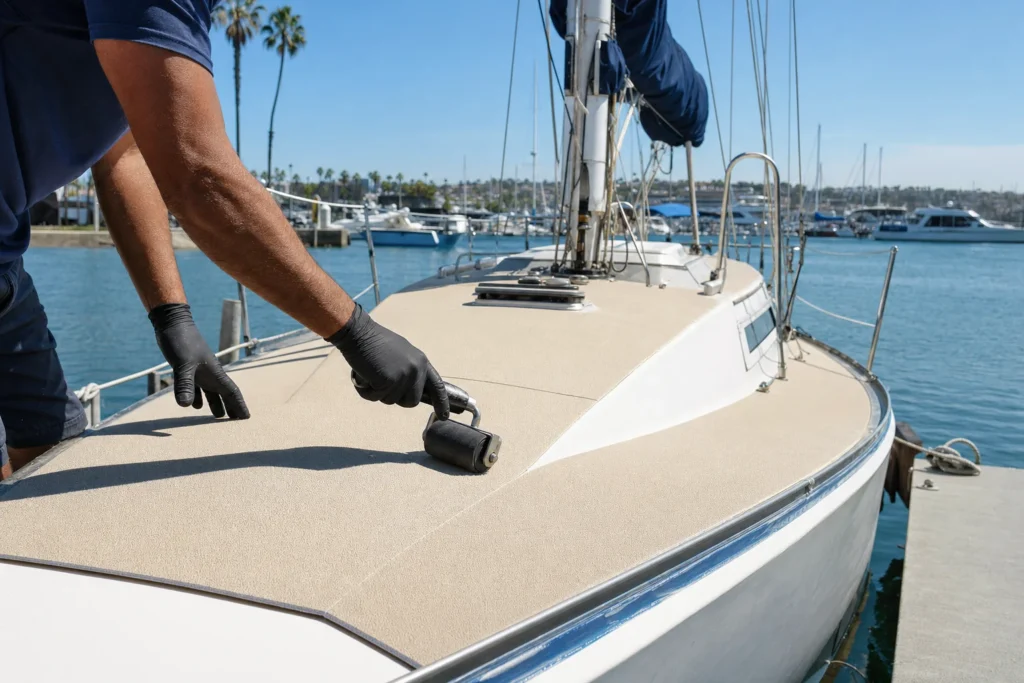
Fishing Boat Flooring: What Works Best
Fishing boat flooring needs to handle constant moisture, fish slime, bait scraps, and heavy foot traffic — conditions that destroy standard carpet within a season or two. The best replacement options balance grip, drainage, durability, and easy cleanup so you spend more time fishing and less time maintaining your deck. If your current carpet is waterlogged, stained, or starting to delaminate, a full replacement with foam or woven vinyl is the most cost-effective long-term fix. Learn more about Boat Carpet Replacement.
Why Fishing Boats Are Harder on Flooring Than Other Boats
A fishing boat sees abuse that a ski boat or pontoon rarely does. Blood, bait, UV exposure, and standing water work together to break down adhesives and rot carpet backing faster than normal wear. Anglers also move quickly and need sure footing when fighting a fish, so a slippery or uneven floor is a safety issue, not just an aesthetic one. Choosing the right material from the start — and installing it correctly — is what separates a floor that lasts two seasons from one that lasts ten.
Flooring Materials Worth Considering for a Fishing Boat
Carpet soaks up fish blood, bait residue, and bilge water, and once the backing is saturated it holds odor no matter how thoroughly you rinse it. Closed-cell foam — EVA or the denser XPE — gives you a surface that cannot absorb liquids, so a quick rinse after a trip is all it takes. Woven marine vinyl works the same way: nothing soaks in, nothing lingers. Both materials also cushion the deck when you kneel to unhook a fish, and neither supports mold growth the way wet carpet backing does.
EVA foam is the more affordable closed-cell option and handles everyday fishing conditions well. XPE foam is denser, holds its shape better under direct sun, and resists pressure marks from coolers and gear — a better fit for boats that sit uncovered in San Diego heat. Woven marine vinyl (AquaMat) suits center consoles and flats boats where a clean, professional look matters as much as performance. Each material has trade-offs in cost and feel underfoot, so the right pick depends on how you fish and how much maintenance you are willing to do.
- EVA foam: closed-cell, waterproof, cushioned underfoot, affordable entry point
- XPE foam: denser than EVA, more heat-stable, resists pressure marks from gear and coolers
- Woven marine vinyl (AquaMat): professional finish, fully waterproof, easy to hose down
- Faux teak: foam in a teak-look finish, no wood maintenance, sharp appearance on casting decks
Signs Your Fishing Boat Floor Needs Replacing
Watch for these warning signs that your current flooring has reached the end of its useful life.
Soft or Spongy Spots:
A deck that flexes underfoot usually means water has reached the plywood substrate and begun to rot. Replacing only the carpet without addressing the subfloor leads to the same problem within a year.
Persistent Odor:
Fish smell that survives a thorough cleaning is trapped in saturated carpet backing or the foam layer beneath it. At that point, cleaning is no longer effective and replacement is the only real solution.
Visible Mold or Mildew:
Dark spots or fuzzy growth on or under the carpet indicate moisture has been sitting long enough to support biological growth, which can spread to the subfloor if left unchecked.
Lifting Edges or Bubbles:
When adhesive fails, carpet edges curl up and create trip hazards. Bubbles in the middle of a run mean water has gotten underneath and broken the bond across a larger area.
Faded or Matted Fibers:
Heavy UV exposure and foot traffic flatten carpet fibers and cause color loss. Beyond appearance, matted carpet loses much of its grip, which is a real safety concern on a moving boat.
Getting the Installation Right the First Time
Even the best foam or woven vinyl flooring fails early if the installation skips key steps. The subfloor must be inspected for rot, fully dried, and primed before any new material goes down. Seams should be kept away from high-traffic areas and sealed with marine-grade seam sealer to prevent water intrusion at the edges. A professional installer familiar with fishing boats will also account for rod holders, livewells, and hatch cutouts — details that matter for both function and a finished appearance. For a complete walkthrough of the replacement process and material options, visit our boat carpet replacement page.
Related Guides
Previous: Boat Carpet To Foam Conversion
Frequently Asked Questions
How long does foam or woven vinyl flooring last on a fishing boat?
With proper installation and routine cleaning, quality foam or woven marine vinyl flooring typically lasts many years on a fishing boat — often a decade or more depending on the material. EVA foam is the more affordable entry point, while XPE foam is denser and holds up better under sun and heavy use. Boats used heavily in saltwater or left uncovered between trips benefit most from the added durability of XPE. Rinsing the deck after every trip makes a significant difference regardless of which material you choose.
Can I install new flooring over old carpet on my fishing boat?
It is not recommended. Old carpet traps moisture beneath any new layer, which accelerates mold growth and adhesive failure. San Diego Boat Flooring removes the existing carpet before installing foam or woven vinyl, which also gives you the chance to inspect the subfloor for soft spots or rot before they become a bigger structural problem.
What is the easiest fishing boat flooring to keep clean?
EVA and XPE foam decking (AquaTraction) and woven marine vinyl (AquaMat) are both straightforward to clean — a hose-down after a trip handles most of what a fishing boat throws at a floor. Foam surfaces resist odor absorption and don’t trap fish slime the way carpet backing does. Woven vinyl wipes down quickly and doesn’t hold standing water, making it a practical choice around fish-cleaning stations and livewells.
Do I need to replace the subfloor when I replace my boat carpet?
Not always, but you should inspect it carefully. Press firmly across the entire deck surface and look for soft or springy areas. Any section that flexes noticeably or shows discoloration should be replaced before new flooring goes down, or the new floor will fail in the same spots.
Is woven marine vinyl or foam decking safe on a fishing boat deck?
Both woven marine vinyl (AquaMat) and closed-cell foam decking (AquaTraction) are designed for wet, high-traffic conditions. AquaMat’s textured surface channels water and holds grip underfoot, while EVA and XPE foam provide a non-slip, cushioned surface that stays stable even when wet — making either a practical choice for a fishing deck.
How much does it cost to replace flooring on a fishing boat?
Cost varies based on boat size, material choice, and whether the subfloor needs repair. EVA foam is generally the most affordable option, while XPE foam and woven marine vinyl cost more upfront but may reduce long-term maintenance expenses. Getting a professional assessment is the best way to understand the full scope before committing to a budget.