
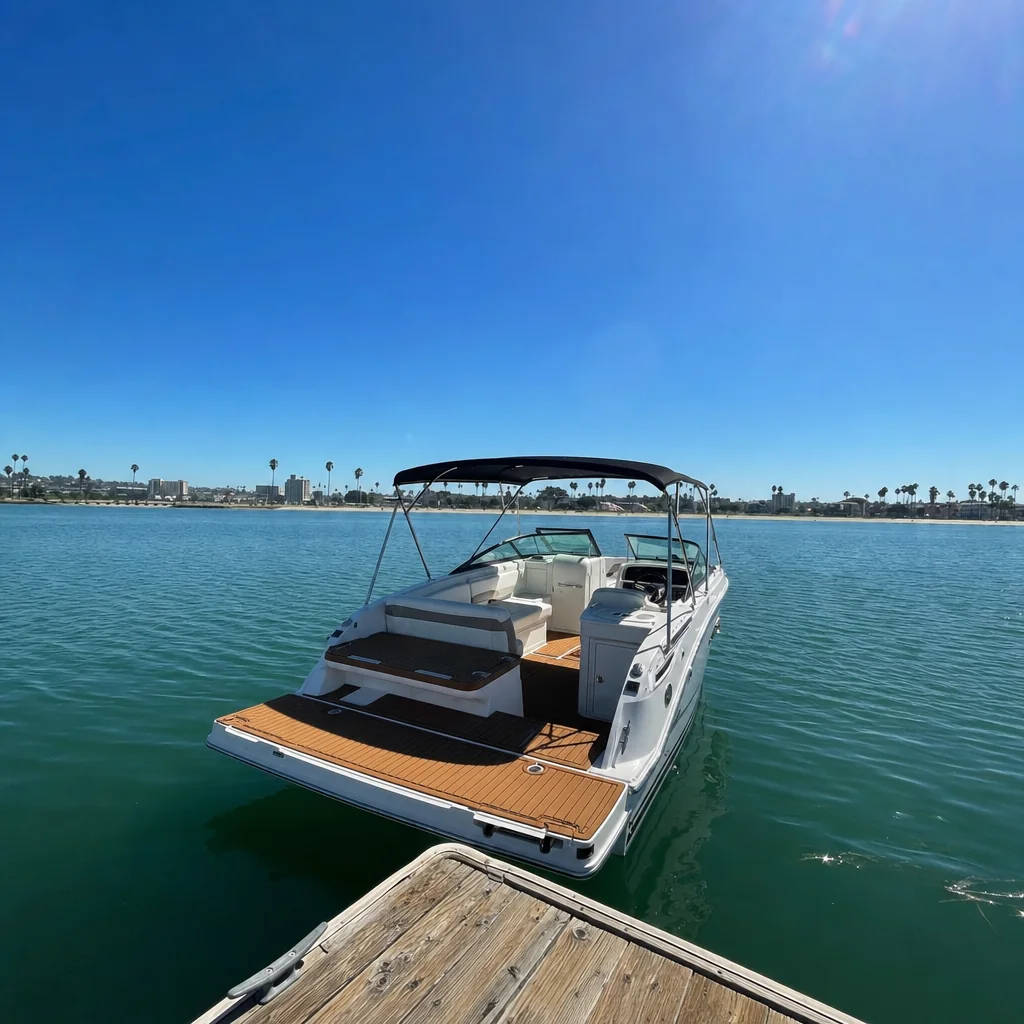
Swim Platform Pads: What to Know Before You Buy
Swim platform pads are purpose-cut foam or EVA matting installed on the rear boarding area of a boat to prevent slipping, protect gelcoat, and make entries and exits from the water more comfortable. The right pad grips wet feet, resists UV and saltwater, and stays put through repeated use. If you are already exploring options, our full guide to boat pads and matting at /boat-pads-and-matting/ covers every area of the boat in one place. Learn more about Boat Matting and Pads.

Why the Swim Platform Deserves Its Own Pad
The swim platform takes more abuse than almost any other surface on a boat. It gets wet constantly, bears the full weight of people climbing in and out of the water, and sits in direct sun for hours at a time. Bare fiberglass or painted surfaces become dangerously slick when wet and show scuff marks quickly. A properly fitted swim platform pad solves all three problems at once: it adds grip, cushions knees and feet, and acts as a sacrificial layer that keeps the underlying gelcoat looking new. Because the platform is exposed to both fresh and salt water, the material you choose matters as much as the fit.
EVA Foam vs. XPE Foam: Choosing the Right Material for Your Swim Platform
EVA foam is the most popular choice for swim platform pads today, and for good reason. It is closed-cell, meaning it does not absorb water, mold, or mildew. It dries quickly, stays soft underfoot, and can be cut to follow the exact contours of any platform shape including notches for motors, ladders, and drain holes. EVA also holds color well, so it stays looking clean even after a full season of heavy use.
XPE foam is the denser, more formstable option. It holds its shape better under direct sun, resists compression from repeated foot traffic, and leaves fewer pressure marks over time — making it the longer-lasting choice for platforms that see heavy use. Marine carpet holds moisture, which can trap odors and eventually damage the surface beneath it, and rubber matting tends to be heavier, harder underfoot, and less resistant to UV fading. For most boaters who want a long-lasting, low-maintenance solution, closed-cell foam is the clear front-runner.
- EVA foam: closed-cell, mold-resistant, lightweight, easy to cut to shape
- XPE foam: denser than EVA, more formstable in direct sun, fewer pressure marks over time
- Woven marine vinyl: fabric-feel surface, closed-cell backing, easy to rinse clean
- Faux teak foam: teak-plank appearance without the weight, cost, or maintenance of real wood
- Self-adhesive vs. snap-in: adhesive bonds permanently; snap-in allows removal for cleaning
Five Factors That Determine the Right Swim Platform Pad
Before ordering or having a pad custom-cut, work through these five considerations to make sure the finished product fits and performs correctly.
Platform Shape:
Most platforms are not simple rectangles. Notches for ladders, motor cutouts, and curved edges all need to be templated accurately before cutting begins or the pad will gap, lift, or look unfinished.
Thickness:
Standard EVA pads run from about 6mm to 20mm thick. Thicker pads cushion better but can interfere with ladder hinges or drain channels, so measure clearances before choosing.
Texture and Traction Pattern:
Diamond, brushed, and teak-plank embossed surfaces all offer different grip levels and aesthetics. Finer textures are easier on bare feet; deeper patterns shed water faster.
Adhesive Type:
Pressure-sensitive adhesive works well on clean, smooth gelcoat. Rough or previously painted surfaces may need a primer or mechanical fastening to hold the pad securely through repeated wetting and drying cycles.
Color Match:
Swim platform pads are visible from the dock and from the water. Choosing a color that complements the hull and deck creates a finished, intentional look rather than an afterthought.
UV and Salt Resistance:
Saltwater accelerates degradation in materials not designed for marine use. Confirm that any pad you buy is rated for continuous marine exposure, not just occasional outdoor use.
Installation and Long-Term Care
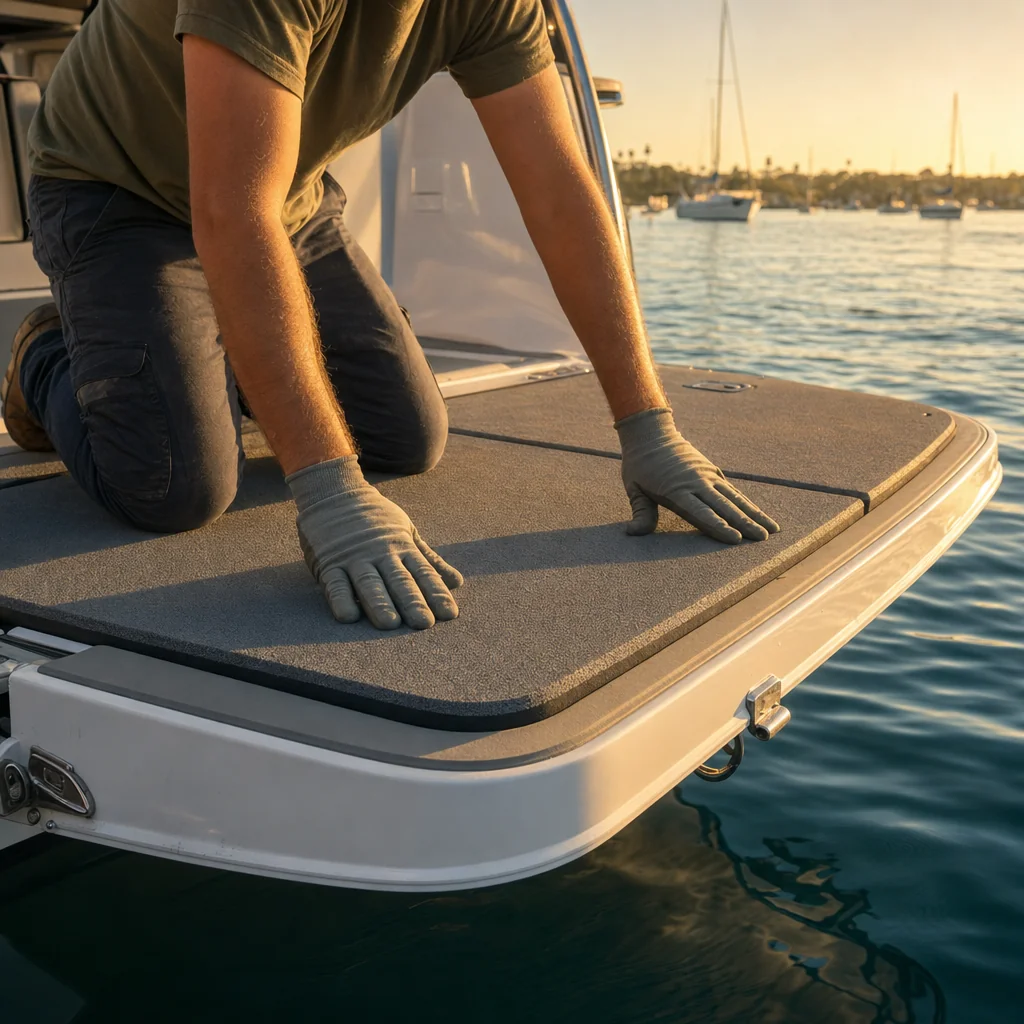
Installing a swim platform pad correctly starts with surface preparation. The gelcoat or fiberglass must be clean, dry, and free of wax, oxidation, or old adhesive residue before the new pad goes down. San Diego Boat Flooring 3D-scans your platform, CNC-cuts the pad to exact shape, and installs it on-site — applying firm, even pressure across the entire surface to prevent air pockets that can cause edges to lift later. Once installed, maintenance is straightforward: rinse with fresh water after each use, scrub lightly with a soft brush and mild soap as needed, and avoid petroleum-based cleaners that can break down the foam over time. A properly fitted and installed pad on a well-prepared surface can last several seasons without peeling or fading.
Related Guides
Next: Helm Pads
Frequently Asked Questions
How do I measure my swim platform for a custom pad?
The most accurate method is to make a cardboard or paper template by tracing the exact outline of the platform, including all cutouts for ladders, motors, and drains. Transfer that template to the pad material before cutting. Measuring with a tape measure alone often misses subtle curves and asymmetries that cause gaps in the finished pad.
Can I install a swim platform pad myself, or do I need a professional?
Some boaters tackle pad installation on their own, particularly with pre-cut or custom-cut EVA foam and peel-and-stick backing. The critical steps are thorough surface cleaning and taking your time during application to avoid bubbles. Irregularly shaped platforms with multiple cutouts are easier to get right with professional templating and cutting — San Diego Boat Flooring handles both the 3D measuring and the installation so the pad fits correctly the first time.
Will the adhesive damage my gelcoat when I eventually remove the pad?
Quality marine-grade adhesive is designed to bond firmly without permanently bonding to gelcoat. When removal is needed, gentle heat from a heat gun softens the adhesive and allows the pad to peel away cleanly. Any remaining residue typically comes off with an adhesive remover that is safe for fiberglass.
How thick should a swim platform pad be?
For most applications, 10mm to 12mm strikes the best balance between cushioning and practicality. Thinner pads around 6mm work where ladder clearance is tight. Thicker pads up to 20mm are popular on platforms used heavily for fishing or diving where people kneel or stand for long periods.
Do swim platform pads work on inflatable or pontoon boats?
Yes, EVA foam pads can be fitted to the boarding platforms on pontoon boats and to the rigid transom boards found on many inflatable dinghies. The same material and adhesive principles apply, though you should confirm the surface is rigid and smooth enough to hold adhesive before committing to a permanent installation.
Where can I learn about pads for other areas of my boat?
Swim platform pads are just one part of a complete boat matting setup. Our boat pads and matting page at /boat-pads-and-matting/ covers cockpit pads, helm station matting, bow pads, and more, with guidance on choosing the right material for each area of the boat.