Helm Pads: Comfort and Protection at the Wheel
Helm pads are cushioned, non-slip mats placed at the helm station to reduce fatigue, protect the deck surface, and give the operator a stable footing during long days on the water. A well-chosen helm pad makes a noticeable difference on any boat where the captain spends hours standing at the wheel. They are one of the most practical additions in the broader world of boat pads and matting. Learn more about Boat Matting and Pads.
Why the Helm Station Deserves Its Own Mat
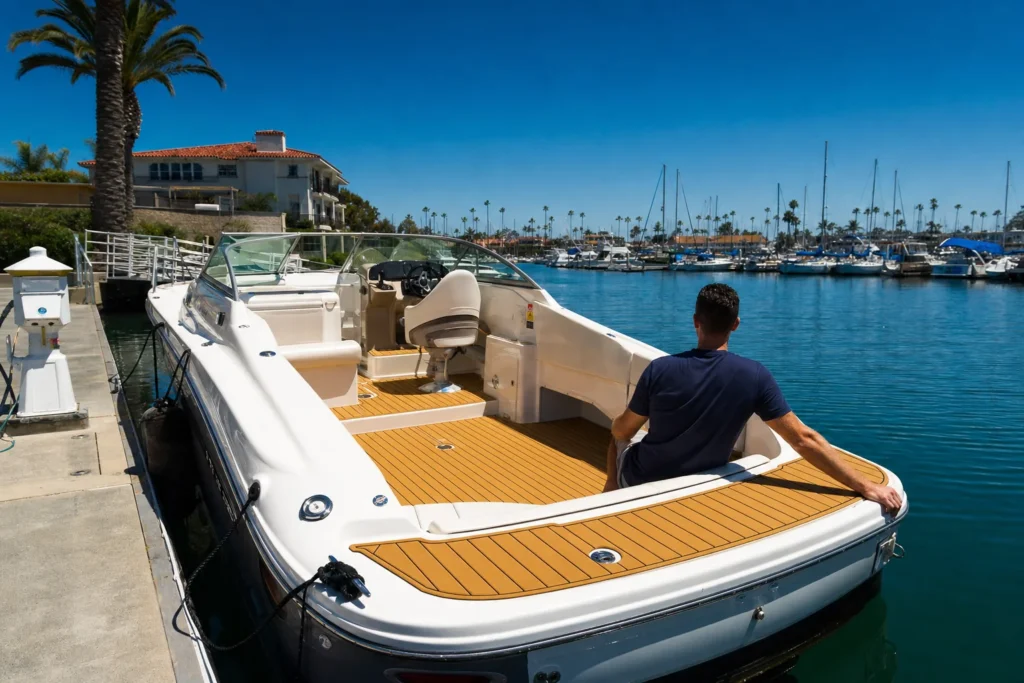
The helm is where the operator stands for the longest stretches, often on hard fiberglass or painted aluminum that transmits every vibration from the hull. That constant contact leads to foot fatigue, sore joints, and reduced focus — all of which matter when you are navigating busy waterways or rough conditions. A dedicated helm pad absorbs vibration, cushions the feet, and creates a defined, grippy zone that keeps you planted even when the boat is moving through chop. Unlike a general-purpose cockpit mat, a helm pad is sized and shaped specifically for the footprint around the wheel and throttle controls.
Materials Used in Quality Helm Pads
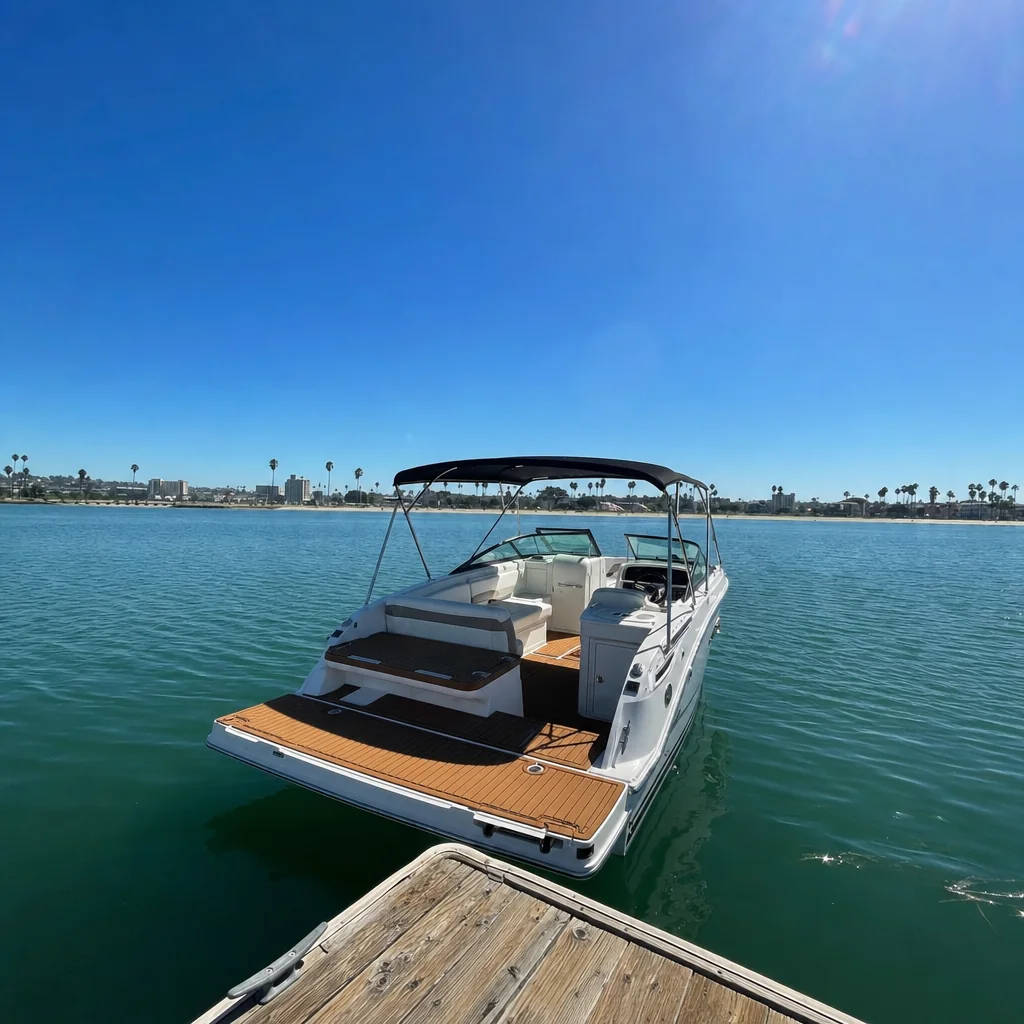
Most helm pads are built from closed-cell foam or EVA foam, each with its own trade-offs. Closed-cell foam is lightweight and resists water absorption, making it easy to rinse and dry quickly. EVA foam is the most popular choice because it combines cushioning with durability and is available in teak-pattern embossing that blends with premium boat interiors. Rubber mats can trap moisture underneath and are heavier to handle, which is why closed-cell foam and EVA remain the preferred options for a dedicated helm pad.
The top surface texture matters as much as the core material. Look for an aggressive non-slip pattern rather than a smooth finish, especially if the helm area is exposed to spray. Some pads include a beveled edge all around so there is no raised lip to catch a foot. The backing should be either suction-cup dots or a non-marking compound that grips the deck without leaving residue or scratching gel coat.
- Closed-cell foam: lightweight, fast-drying, good basic cushioning
- EVA foam: best balance of comfort and durability, teak-look options available
- XPE foam: denser than standard EVA, more resistant to compression and UV-related softening
- Beveled edges reduce trip hazards in a busy helm area
- Non-marking backing protects gel coat and painted decks
Key Factors When Choosing a Helm Pad
These are the practical details that separate a pad you will use every season from one that ends up in the bilge after a few trips.
Size and Shape:
Measure the usable floor space at your helm before ordering. Many pads come in standard rectangles, but custom-cut options let you work around pedestals, hatches, and console bases.
Thickness:
Pads range from about three-eighths of an inch to nearly an inch thick. Thicker pads offer more cushioning but can feel unstable underfoot if the foam is too soft, so look for firm-density foam in anything over half an inch.
UV Resistance:
A helm pad on an open center console faces direct sun all day. Choose a material rated for UV exposure or the surface will fade, crack, and harden within a season or two.
Drainage and Drying:
Perforated or open-pattern surfaces let water drain through rather than pool on top, which keeps the pad from becoming slippery and prevents mold from developing underneath.
Attachment Method:
Suction cups work well on smooth fiberglass but fail on textured or painted surfaces. Adhesive-backed pads create a permanent bond, so confirm placement carefully before committing.
Aesthetic Match:
Teak-embossed EVA in tan or gray blends naturally with most boat interiors. If the rest of your cockpit matting uses a specific color or pattern, matching the helm pad ties the whole deck together.

Helm Pads as Part of a Complete Matting System
A helm pad works best when it is part of a coordinated approach to boat pads and matting across the entire vessel. Cockpit mats, bow pads, and swim platform matting all serve related purposes — protecting the deck, reducing fatigue, and improving grip — and choosing materials that match in color and texture gives the boat a finished, intentional look. When you plan the helm pad alongside the rest of your matting, you can also ensure that edges align cleanly and that no gaps are left where water can pool and sit against bare fiberglass. Thinking about the full deck layout from the start saves money compared to buying piecemeal and replacing mismatched sections later.
Related Guides
Previous: Swim Platform Pads | Next: Cooler And Step Pads
Frequently Asked Questions
How do I measure for a helm pad?
Stand at your helm in your normal operating position and mark the area where your feet naturally fall, then measure the length and width of that zone. Account for any obstructions like a pedestal base or floor drain. Adding a few inches on each side of your natural stance gives you room to shift your weight during a long run.
Can I cut a helm pad to fit an irregular space?
EVA foam and closed-cell foam pads can both be trimmed with a sharp utility knife or a jigsaw with a fine-tooth blade. Score the cut line first with a straightedge to keep the edge clean. For complex or irregular shapes, San Diego Boat Flooring 3D-scans your deck and CNC-cuts the pad to fit precisely — a cleaner result than hand-trimming at home.
Will a helm pad stay in place in rough water?
A pad with suction-cup backing on smooth fiberglass holds well under normal conditions, but heavy spray or a wet deck can reduce suction. If your helm area gets consistently wet, a pad with adhesive backing or one that is cut to fit snugly against surrounding trim pieces will stay more reliably in place.
How do I clean and maintain a helm pad?
Rinse with fresh water after every outing to remove salt, which degrades foam over time. For deeper cleaning, a mild soap and a soft brush work on EVA and rubber without damaging the surface texture. Avoid bleach or solvent-based cleaners, which can break down the foam and strip UV inhibitors from the material.
How long should a quality helm pad last?
A well-made EVA or closed-cell foam helm pad used on a boat stored out of the sun when not in use can last five to eight years or more. Pads left exposed to direct sun year-round will degrade faster, so covering the helm area when the boat is docked extends the life of the pad significantly.
Are helm pads the same as cockpit mats?
They serve similar purposes but are not the same product. A cockpit mat is typically a larger piece designed to cover most of the cockpit floor, while a helm pad is a smaller, purpose-cut mat sized for the operator's standing area at the wheel. Using both together gives you full coverage with targeted cushioning right where it matters most.