
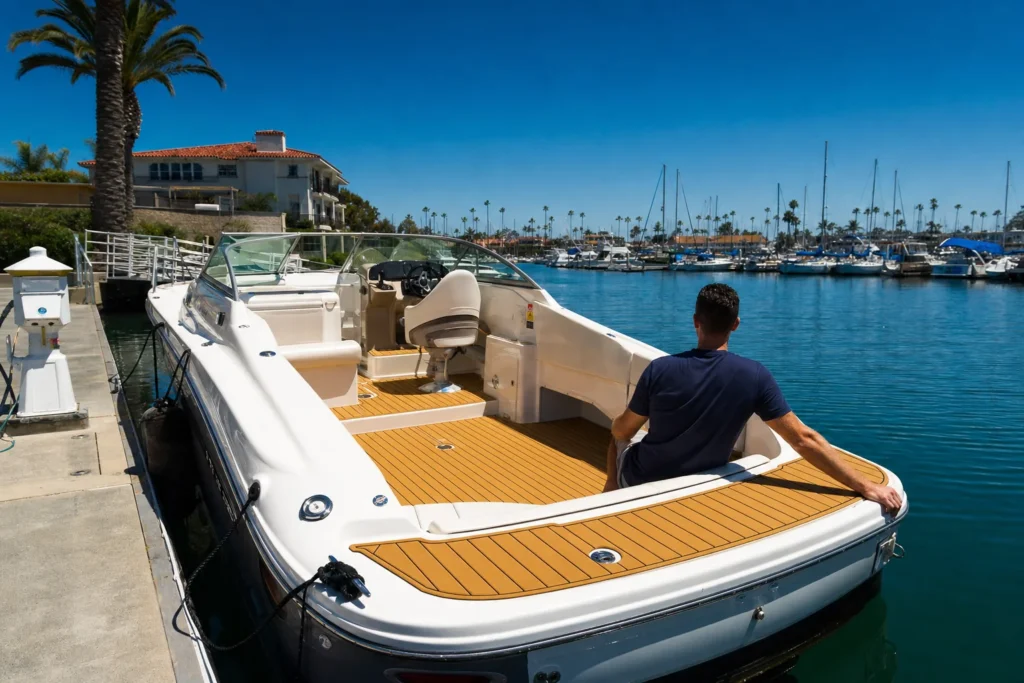
Cooler and Step Pads for Your Boat
Cooler and step pads are small but essential pieces of boat matting that protect your deck, reduce slip hazards, and keep gear from shifting underway. A quality pad placed under a cooler or at a boarding step can prevent scratched gelcoat, absorb vibration, and give passengers a stable surface to push off from. If you are already thinking about deck protection, our full guide to boat pads and matting at /boat-pads-and-matting/ covers every option from bow to stern. Learn more about Boat Matting and Pads.
Why Cooler and Step Pads Are Worth the Investment
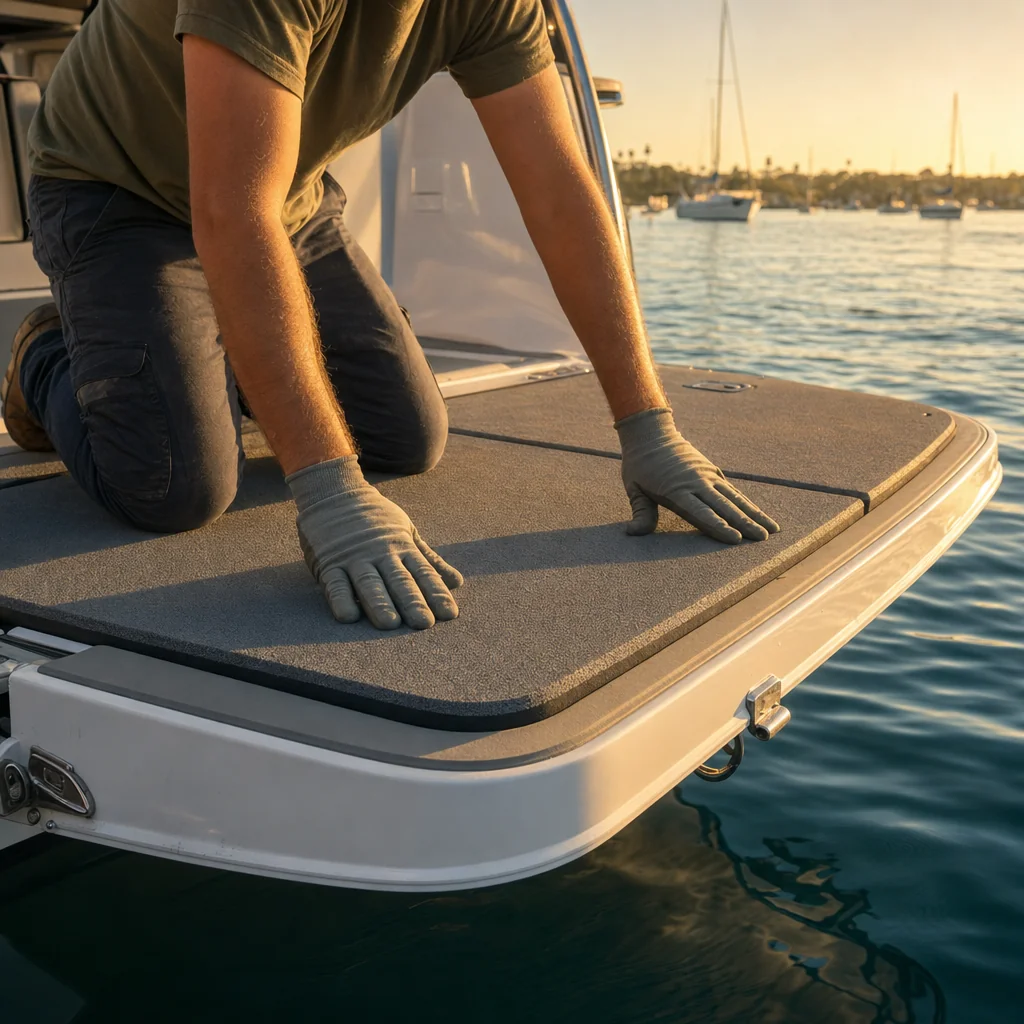
A heavy cooler sliding across a fiberglass deck during a sharp turn can leave deep scratches that are expensive to repair. Step pads take even more abuse because every boarding and exit concentrates weight on a single small area, often when the surface is wet. Purpose-made cooler and step pads use closed-cell foam and EVA that grip both the deck below and the object above, so nothing moves and nothing gets damaged. Spending a modest amount on the right pad now is almost always cheaper than refinishing or repainting a section of deck later.
Choosing the Right Material for Your Pads
EVA foam is the most popular material for both cooler and step pads because it is lightweight, UV-stable, and available in a range of thicknesses and textures. A diamond or teak-pattern emboss gives the surface enough grip to feel secure underfoot without being so aggressive that it traps grit and becomes hard to clean. For step pads specifically, a thickness of at least eight millimeters lets the pad compress slightly under foot pressure and return to shape rather than permanently deforming.
Rubber mats are a common off-the-shelf alternative, but they tend to be heavier, retain heat in direct sun, and can trap moisture underneath — which matters when the pad sits right where passengers step barefoot. Closed-cell EVA avoids those drawbacks: it stays cooler to the touch, resists moisture retention, and holds up better in a saltwater environment over multiple seasons.
- EVA foam: lightweight, UV-resistant, stays cool underfoot
- Closed-cell construction: resists moisture absorption, holds shape under repeated impact
- XPE foam: denser than standard EVA, more resistant to heat and permanent compression
- Teak-look emboss: adds style while channeling water away from the surface
- Professional fit: each pad is measured and installed to sit flush with no gaps or curl
Key Factors When Selecting a Cooler or Step Pad
Run through these six considerations before you commit to make sure the pad you choose actually fits your boat and your use case.
Size and Fit:
Measure the cooler footprint or step area precisely. A pad that overhangs the edge can curl and become a trip hazard, while one that is too small leaves unprotected deck exposed.
Thickness:
Thicker pads cushion impact and protect the deck better, but they can raise a cooler enough to interfere with rod holders or gunwale storage. Eight to twelve millimeters covers most situations.
Backing Type:
Self-adhesive pads are quick to install but permanent removal can lift gelcoat. Non-adhesive pads with a textured rubber bottom are easier to reposition and clean under.
UV and Salt Resistance:
Marine-grade EVA and rubber are formulated to resist fading and degradation from salt spray. Consumer-grade foam mats will harden and crack within a season in a saltwater environment.
Drainage Texture:
A flat pad holds water underneath and can trap sand that scratches the deck. Raised patterns or perforations let water drain and air circulate, keeping the deck drier and the pad cleaner.
Color Match:
Pads are available in neutral grays, tans, and blacks as well as teak tones. Choosing a color that complements your existing deck matting gives the boat a finished, intentional look rather than a patchwork appearance.
Installation and Maintenance Tips
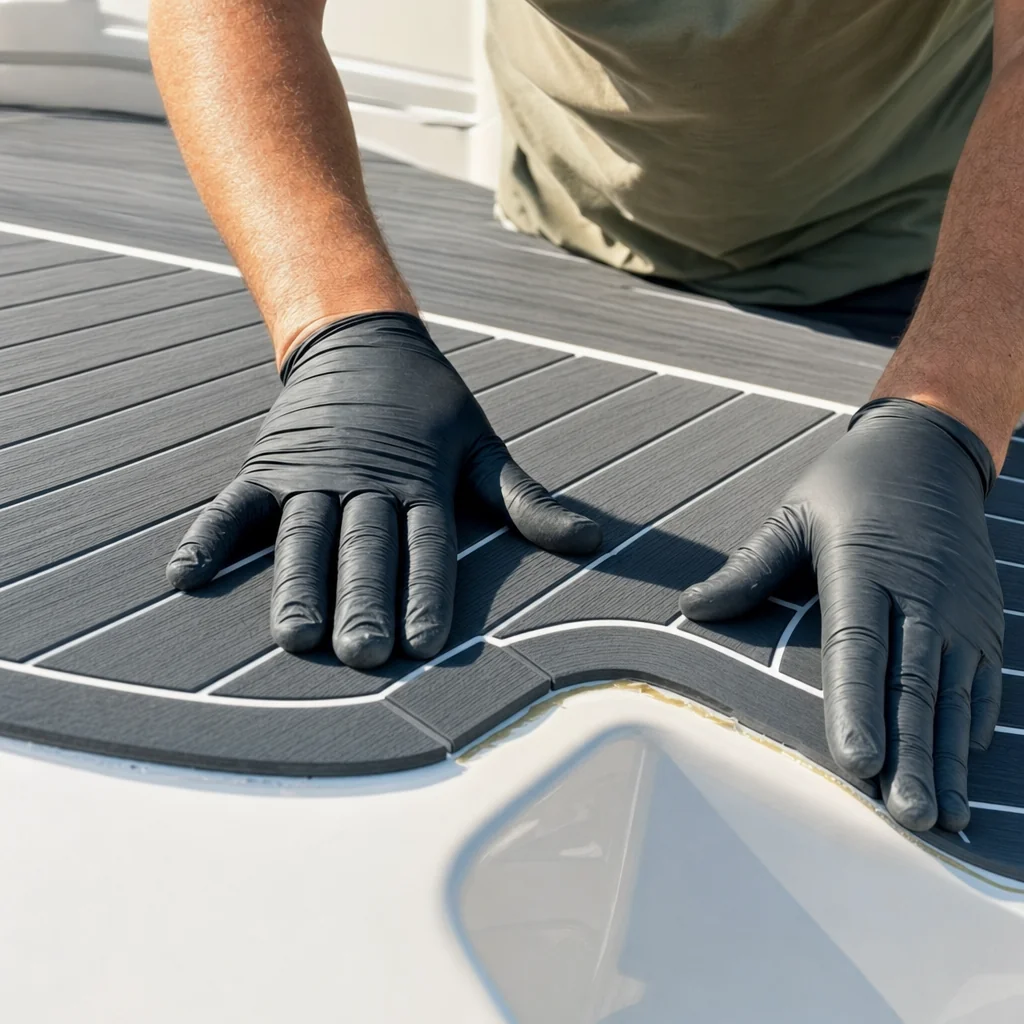
Most cooler and step pads install in minutes without tools. For adhesive-backed pads, clean the deck with isopropyl alcohol, let it dry completely, peel the liner, and press firmly from the center outward to avoid air bubbles. Non-adhesive pads simply lay flat and rely on texture and weight to stay in place, making them easy to remove for thorough deck cleaning. To extend the life of any pad, rinse it with fresh water after every saltwater trip, scrub with a soft brush and mild soap monthly, and store it out of direct sun when the boat is not in use for extended periods.
Related Guides
Previous: Helm Pads
Frequently Asked Questions
Can I cut a cooler pad to a custom size?
Yes. EVA and rubber pads can be trimmed with a sharp utility knife or heavy scissors. Mark your cut line with a straightedge first so the edges stay clean and even. Rounded corners are worth the extra effort because they are less likely to peel up over time.
Will a self-adhesive step pad damage my gelcoat when I remove it?
It can, especially if the pad has been in place for more than one season or has been exposed to high heat. To reduce the risk, warm the pad with a heat gun on a low setting before peeling, and remove any residue with an adhesive remover that is safe for fiberglass. Non-adhesive pads avoid this problem entirely.
How thick should a step pad be for a boarding ladder area?
At least ten millimeters is a good starting point for a boarding step because the load is concentrated and repeated. If passengers tend to step hard or the area sees heavy traffic, going up to fifteen millimeters gives better cushioning and longer pad life.
Do cooler pads work on aluminum boats as well as fiberglass?
Yes. The pad protects the deck surface regardless of the material underneath. On aluminum, a non-adhesive pad with a textured rubber base is often preferred because adhesives can be harder to remove cleanly from bare or painted aluminum.
How often should I replace a step pad?
A quality marine-grade pad used regularly should last two to four seasons before the surface texture wears smooth enough to reduce grip. Inspect the pad at the start of each season and replace it if the surface feels slick when wet or if the edges have started to curl or crack.
Where can I find more options for protecting my entire deck?
Cooler and step pads are just one part of a complete deck protection plan. Visit our boat pads and matting page at /boat-pads-and-matting/ for a full overview of materials, coverage options, and how to coordinate pads across different areas of your boat.