
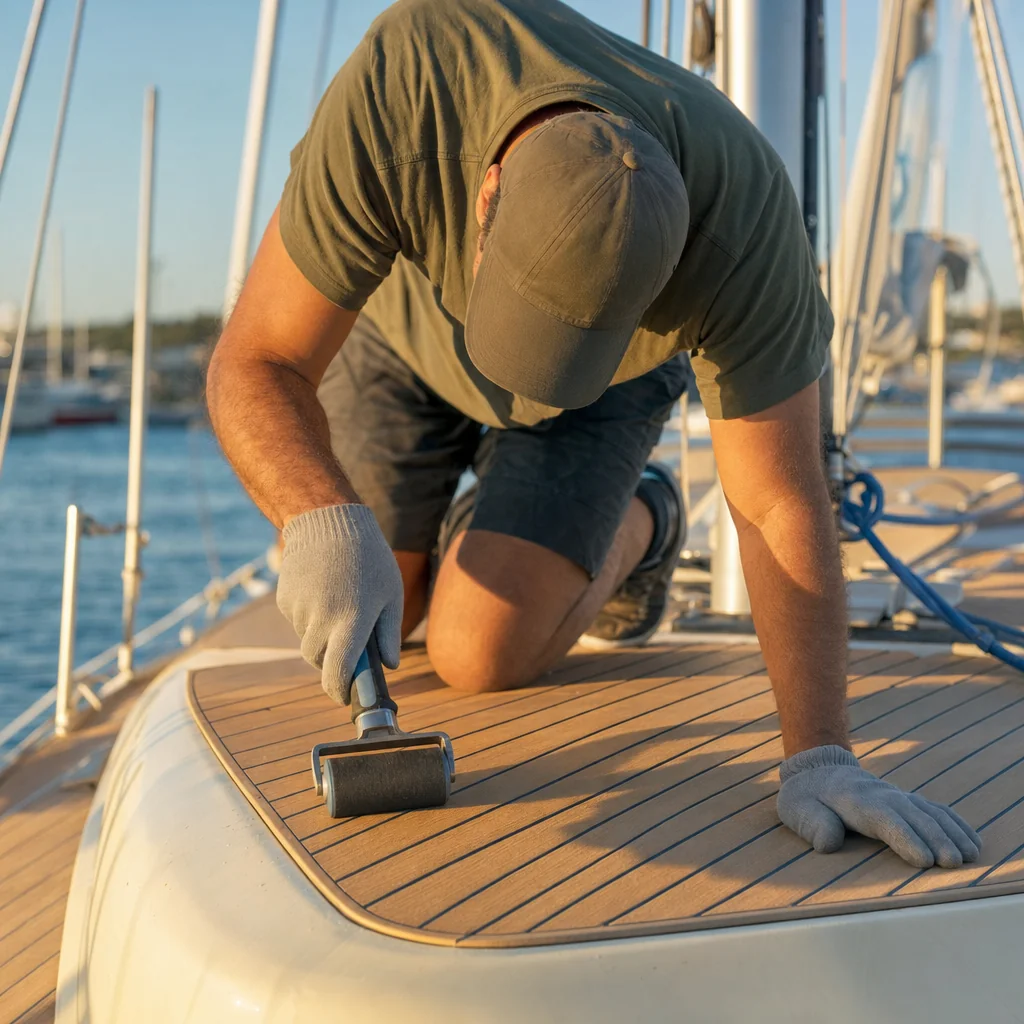
Faux Teak Boat Decking: The Smarter Alternative
Faux teak boat decking gives you the warm, classic look of real teak without the steep cost, heavy weight, or demanding upkeep that comes with natural wood. Most modern faux teak products are made from EVA foam, which is why they have become the go-to choice for boat owners who want style and practicality in one package. If you are weighing your options, understanding how faux teak works and what sets quality products apart will help you make a confident decision. Learn more about Eva Foam Boat Decking.
What Faux Teak Boat Decking Actually Is
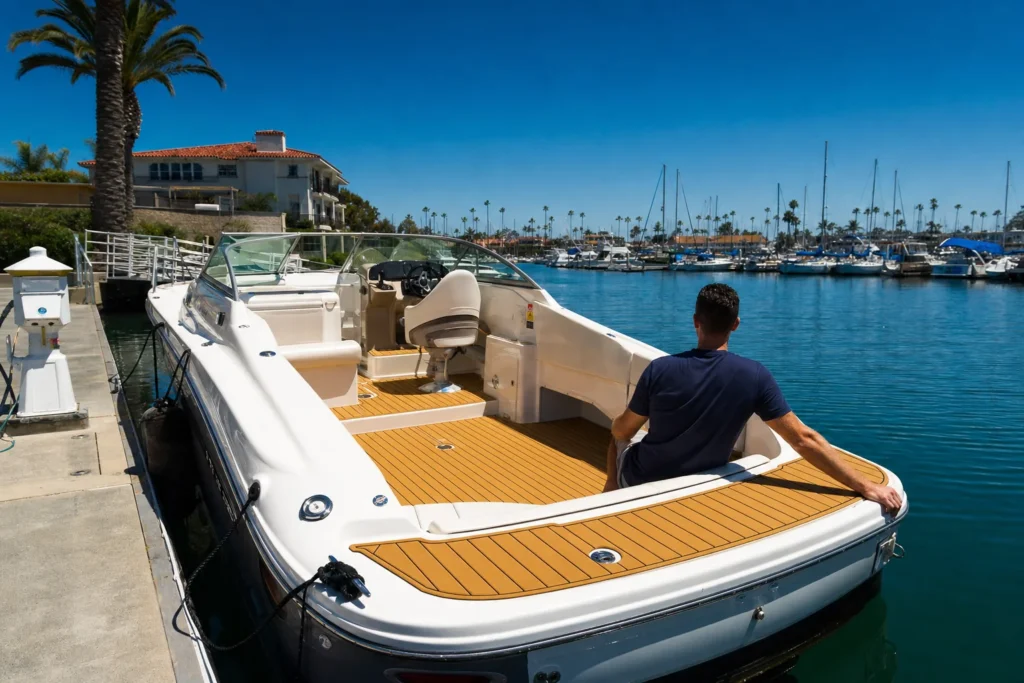
Faux teak boat decking is a surface material designed to replicate the grain pattern, color, and texture of real teak planking. The most widely used version is made from closed-cell EVA foam that is embossed with a wood-grain texture and cut into plank-style panels or custom sheets. It bonds directly to your existing deck using a pressure-sensitive adhesive, so there is no drilling, no caulking, and no risk of water intrusion through fastener holes. The result looks convincingly like traditional teak but behaves more like a modern marine composite.
Why Boat Owners Are Moving Away from Real Teak
Real teak has been the gold standard for boat decking for generations, and for good reason: it is naturally oily, slip-resistant when wet, and beautiful. The problem is that maintaining it is a serious commitment. Teak requires regular cleaning, sanding, and oiling to prevent it from turning gray and cracking. Over time, the planks thin out from repeated sanding and eventually need full replacement, which is one of the most expensive jobs in boat refitting.
Faux teak sidesteps every one of those issues. EVA foam faux teak does not absorb water, does not splinter, and does not need oiling or sanding. It stays cooler underfoot than bare fiberglass and provides reliable grip even when the deck is wet. For owners who want to spend their time on the water rather than maintaining the boat, the trade-off is straightforward.
- No sanding, oiling, or annual refinishing required
- Significantly lighter than real teak planking
- Resists mold, mildew, and UV fading with proper care
- Installs without drilling or through-deck fasteners
- Costs a fraction of real teak installation
Key Factors That Separate Quality Faux Teak Products
Not all faux teak decking is made the same, and knowing what to look for will save you from a product that looks great in photos but fails on the water.
Foam Density:
Higher-density EVA foam holds its shape under foot traffic and UV exposure. Low-density foam compresses unevenly and can develop permanent indentations over time.
Grain Texture Depth:
A deeply embossed grain pattern looks more realistic and also improves grip. Shallow textures tend to look flat and wear smooth faster.
UV Stabilizers:
Quality faux teak is formulated with UV inhibitors that slow color fading. Without them, the material can lighten or become brittle within a single season in direct sun.
Adhesive System:
The backing adhesive needs to bond to fiberglass, aluminum, and painted surfaces without lifting at the edges. Marine-grade pressure-sensitive adhesive is the standard to look for.
Thickness:
Most quality products run between 6mm and 8mm thick. Thinner material offers less cushioning and insulation, while anything over 10mm can create a trip hazard at panel edges.
Custom vs. Sheet Format:
Pre-cut custom kits fit your exact deck layout with minimal trimming. Generic sheet material works but requires more time and skill to cut cleanly around hatches and cleats.
How Faux Teak Fits Into a Full EVA Foam Deck Refit
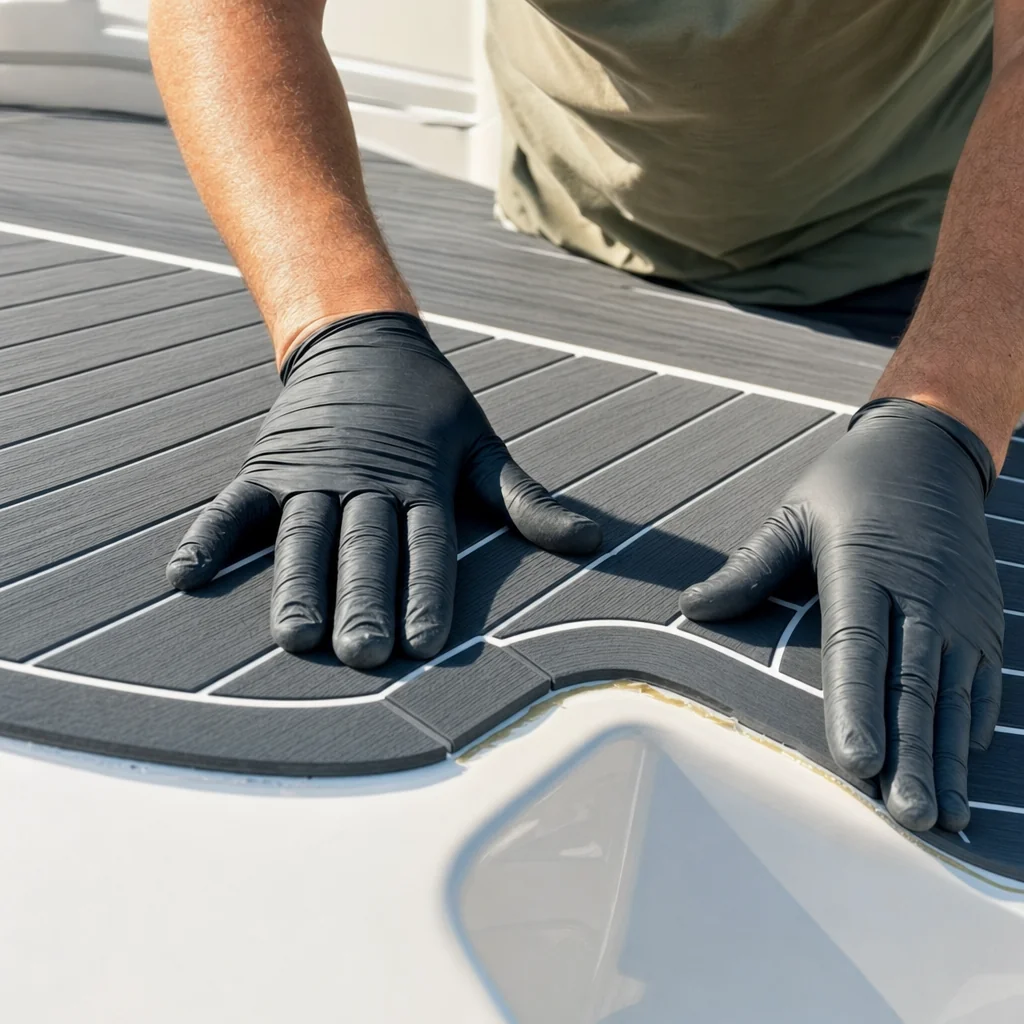
Faux teak is one style within the broader category of EVA foam boat decking, which also includes solid colors, carbon-fiber patterns, and custom two-tone designs. Choosing faux teak means you get the traditional aesthetic that suits classic cruisers, center consoles, and sportfishing boats particularly well, while still benefiting from everything EVA foam offers as a material. If you are planning a full deck refit, it is worth looking at the complete range of EVA foam options so you can match the decking style to your boat's overall look and how you use it. Our EVA foam boat decking page covers the full picture, including material specs, how each option performs on the water, and how to choose the right product for your specific vessel.
Related Guides
Next: Non Slip Boat Flooring
Frequently Asked Questions
How long does faux teak boat decking last?
A quality EVA foam faux teak deck typically lasts five to ten years with normal use and basic maintenance. Longevity depends on UV exposure, how often the boat is used, and whether the surface is kept clean and free of standing water under the edges. Boats stored outdoors in intense sun year-round will see faster fading than those kept under cover.
Can faux teak decking be installed over an existing fiberglass deck?
Yes, and that is actually the most common installation scenario. The deck surface needs to be clean, dry, and free of wax, grease, or flaking paint before the adhesive-backed panels go down. San Diego Boat Flooring handles the full installation, including surface prep, precise fitting around hatches and cleats, and final bonding.
Does faux teak get hot in direct sunlight?
EVA foam faux teak stays noticeably cooler than bare fiberglass or aluminum in direct sun, but it will still warm up on a hot day. Darker teak colorways absorb slightly more heat than lighter ones. Overall, it is one of the more comfortable decking surfaces to stand on barefoot compared to other marine materials.
How do you clean faux teak boat decking?
Routine cleaning is simple: rinse with fresh water and wipe down with a mild soap solution using a soft brush. Avoid harsh solvents, abrasive scrubbers, or high-pressure washing at close range, as these can lift the adhesive edges or damage the embossed texture. A quick rinse after each use is usually enough to keep the surface looking good.
Is faux teak decking slippery when wet?
No, the embossed grain texture provides reliable traction even when the deck is wet or splashed with saltwater. This is one of the practical advantages faux teak has over real teak, which can become slick when the natural oils are depleted and the surface is not freshly sanded.
What is the difference between faux teak and other EVA foam deck colors?
The difference is purely aesthetic. Faux teak uses a wood-grain emboss pattern and a brown or honey-toned colorway to mimic real teak planking, while other EVA foam decking comes in solid colors or alternative textures. The material properties, installation method, and durability are the same across the product family.