
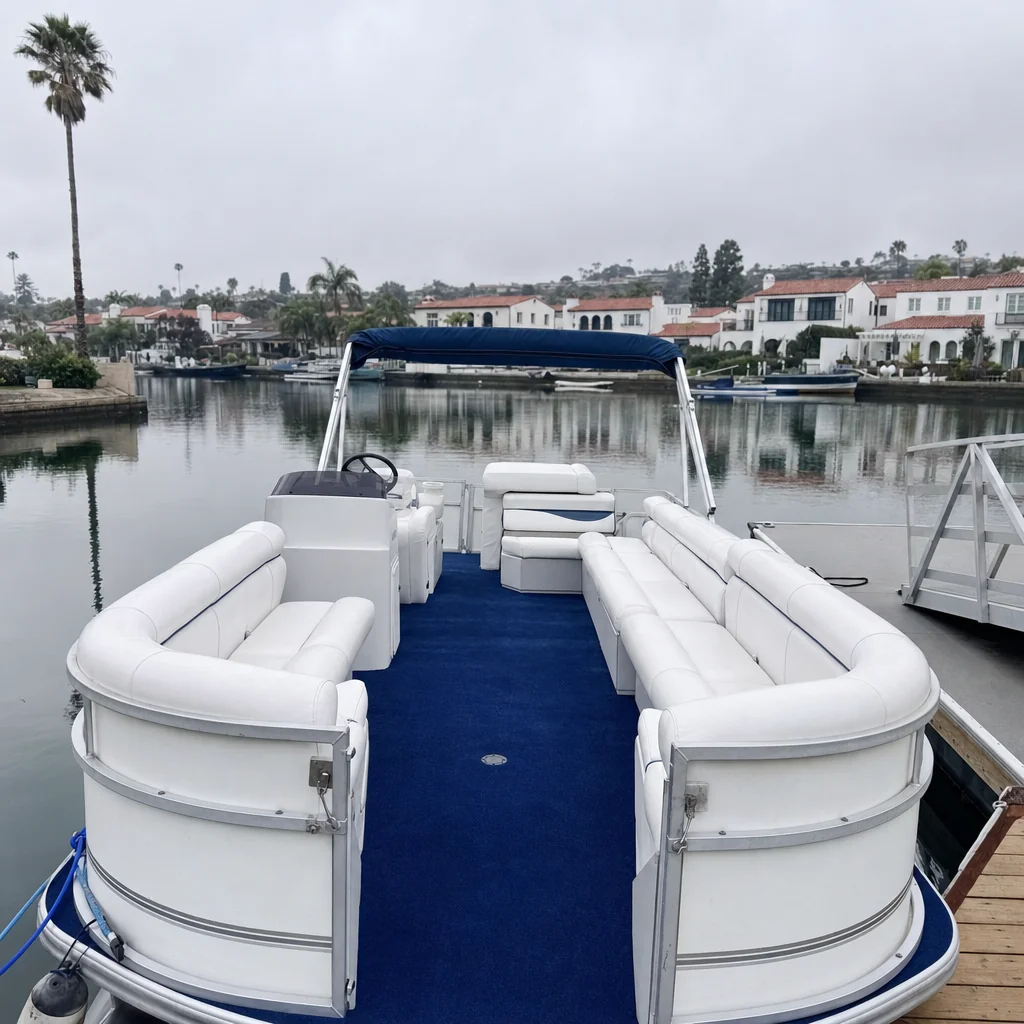
Pontoon Boat Flooring: Options, Costs & What Lasts
Pontoon boat flooring takes more abuse than almost any other marine surface — constant foot traffic, UV exposure, splashing water, and the occasional dropped anchor. The right replacement material keeps your deck safe, comfortable, and good-looking for years without constant maintenance. Marine vinyl flooring is the most popular choice for pontoon owners because it handles all of those conditions while staying affordable and durable. Learn more about Marine Vinyl Flooring.
Why Pontoon Decks Wear Out Faster Than You Expect
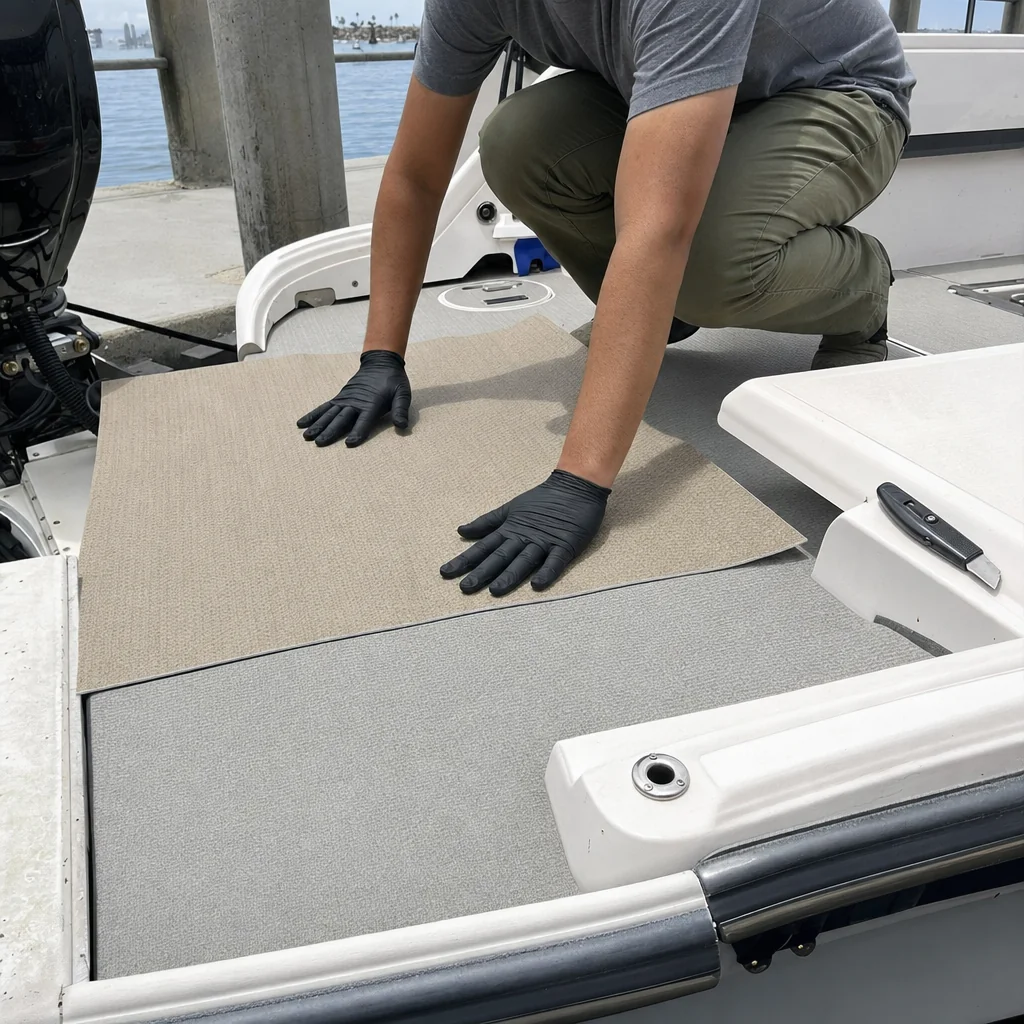
Pontoon boats sit low to the water and carry more passengers than most other recreational boats, which means the deck surface faces heavy, repeated stress across a wide flat area. Original carpet traps moisture underneath, leading to mold, rot, and soft spots in the aluminum or wood substructure. Even quality factory flooring typically shows significant wear within five to eight years of regular use. Replacing it before the substructure is compromised saves a substantial amount of money and keeps the boat structurally sound.
Marine Vinyl vs. Other Pontoon Flooring Materials
Marine vinyl flooring has largely replaced carpet as the go-to pontoon deck surface because it does not absorb water, resists mildew, and cleans up with a quick rinse. Modern embossed textures provide enough grip to meet safety expectations even when wet. Compared to teak or composite wood decking, vinyl costs significantly less and requires almost no seasonal maintenance.
Foam-backed vinyl adds a layer of cushioning that makes long days on the water noticeably more comfortable, which matters on a boat where guests often stand for hours. EVA foam tiles are another option some owners consider, but they tend to lift at the edges over time and do not seal the substructure as completely as a glued sheet installation. For most pontoon owners, marine-grade vinyl sheet flooring strikes the best balance of durability, comfort, cost, and long-term protection.
- Marine vinyl sheet: best full-coverage protection, professional finish
- Vinyl snap tiles: more seams exposed, slightly less watertight than sheet installation
- EVA foam tiles: soft underfoot, but edges lift with heavy use
- Outdoor carpet: absorbs water and fish blood, high long-term moisture and mold risk
- Teak or composite wood: premium look, significantly higher cost
Key Factors That Affect Pontoon Flooring Cost
Several variables move the final price up or down before a single piece of vinyl is cut.
Deck Square Footage:
Pontoon decks range from roughly 150 to over 300 square feet. Larger decks require more material and more labor time, directly raising the total cost.
Substructure Condition:
Rotted or warped decking boards must be replaced before new flooring goes down. Skipping this step causes the new surface to fail prematurely.
Vinyl Grade and Thickness:
Marine vinyl ranges from standard 20-oz material to heavy-duty 34-oz versions. Thicker vinyl resists punctures and UV degradation longer, justifying the higher per-yard price.
Pattern and Color:
Solid colors and basic textures cost less than wood-grain or woven patterns. Custom colors may require a minimum order that adds to the overall price.
Professional vs. DIY Install:
A professional installation adds labor cost but ensures seams are tight, adhesive is applied correctly, and edges are finished so water cannot get underneath.
Furniture and Hardware Removal:
Seats, rails, and pedestal hardware must come off before the deck is replaced. Complex layouts with many fixed components take longer to disassemble and reassemble.
Getting the Installation Right the First Time
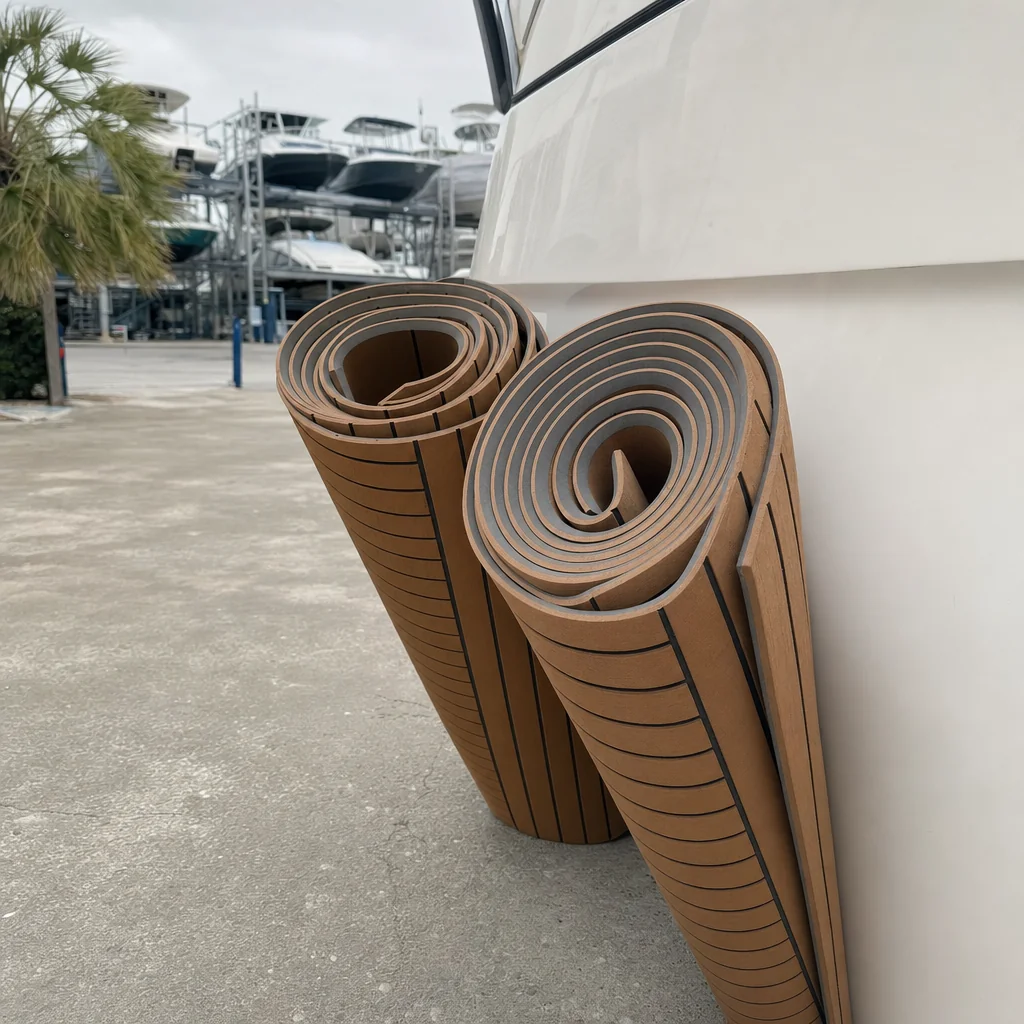
A pontoon flooring job done correctly starts with a thorough inspection of the aluminum frame and any wood substrate underneath the old carpet or vinyl. Any soft, discolored, or delaminated material should be replaced with marine-grade plywood before the new surface goes down. The vinyl is then cut to fit around hatches, pedestal bases, and rail posts, and adhered with a waterproof contact cement that stays flexible through temperature swings. Tight seams and properly sealed edges are what separate a floor that lasts a decade from one that starts peeling within a season.
Related Guides
Next: Yacht Interior Flooring
Frequently Asked Questions
How long does marine vinyl flooring last on a pontoon boat?
A quality marine vinyl installation typically lasts ten to fifteen years with basic care. UV exposure and heavy foot traffic are the main factors that shorten that lifespan, so keeping the boat covered when not in use makes a meaningful difference.
Does San Diego Boat Flooring handle the installation?
Yes. San Diego Boat Flooring measures your deck with a 3D scan, cuts every piece on a CNC machine, and installs it at your boat. That means seams are tight, adhesive is applied correctly, and edges are sealed so water cannot get underneath.
Do I need to replace the wood subfloor before installing new flooring?
Yes, if there is any softness, discoloration, or visible rot. Installing new flooring over a compromised subfloor traps moisture and causes the new surface to fail quickly. Replacing damaged boards adds cost upfront but protects the entire investment.
What is the best color or texture for a pontoon deck?
Lighter colors reflect heat and keep the surface cooler underfoot on sunny days, which matters on a boat where guests walk barefoot. Textured or embossed patterns hide scuffs and dirt better than smooth finishes and provide more grip when wet.
How do I clean and maintain marine vinyl pontoon flooring?
Rinse the deck with fresh water after every outing to remove salt, sunscreen, and debris. For deeper cleaning, a mild soap and a soft brush work well. Avoid harsh solvents or stiff-bristle scrubbers, which can break down the vinyl's UV-protective coating over time.
Is marine vinyl flooring the same as regular vinyl flooring?
No. Marine vinyl is formulated to resist prolonged UV exposure, mildew, and constant moisture in ways that interior or even standard outdoor vinyl cannot match. Using non-marine vinyl on a pontoon deck will result in fading, cracking, and adhesive failure much sooner than a purpose-built product.